 004
PlayLEGO
Twelve Thousand Pieces
On 1 November 2026, a model of Gaudí’s basilica became the largest LEGO set ever sold. We stacked every set over 5,000 pieces to see how the giants grew, what a piece costs, and how much shelf they need.
No. 011 · Apple
Thirty-nine chips, sixteen years, one number that grew 184-fold and then went quiet.
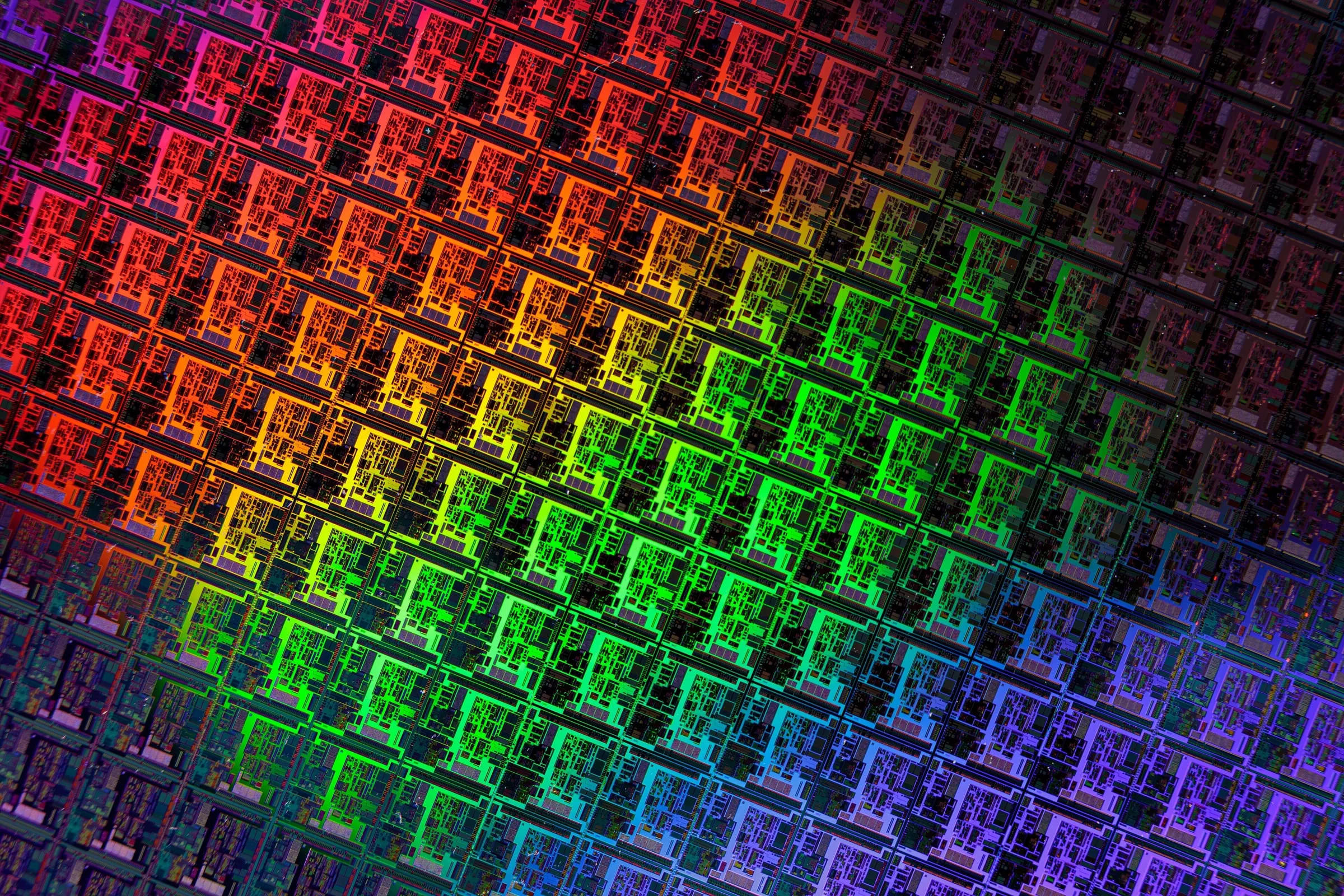
Rob Bulmahn / CC BY 2.0
Since 2010 Apple has announced 39 chips of its own: the A-series for the iPhone and iPad, and since 2020 the M-series for the Mac. For most of them it told the world how many transistors were inside, the tiny switches that do a chip’s work. The number went from about one billion to 184 billion. Then, in September 2024, it mostly stopped saying.
Apple silicon, 2010 to 2026
01 · The count
Apple’s biggest chip doubled its transistor count every 18 months. Moore’s law asks for every 24.
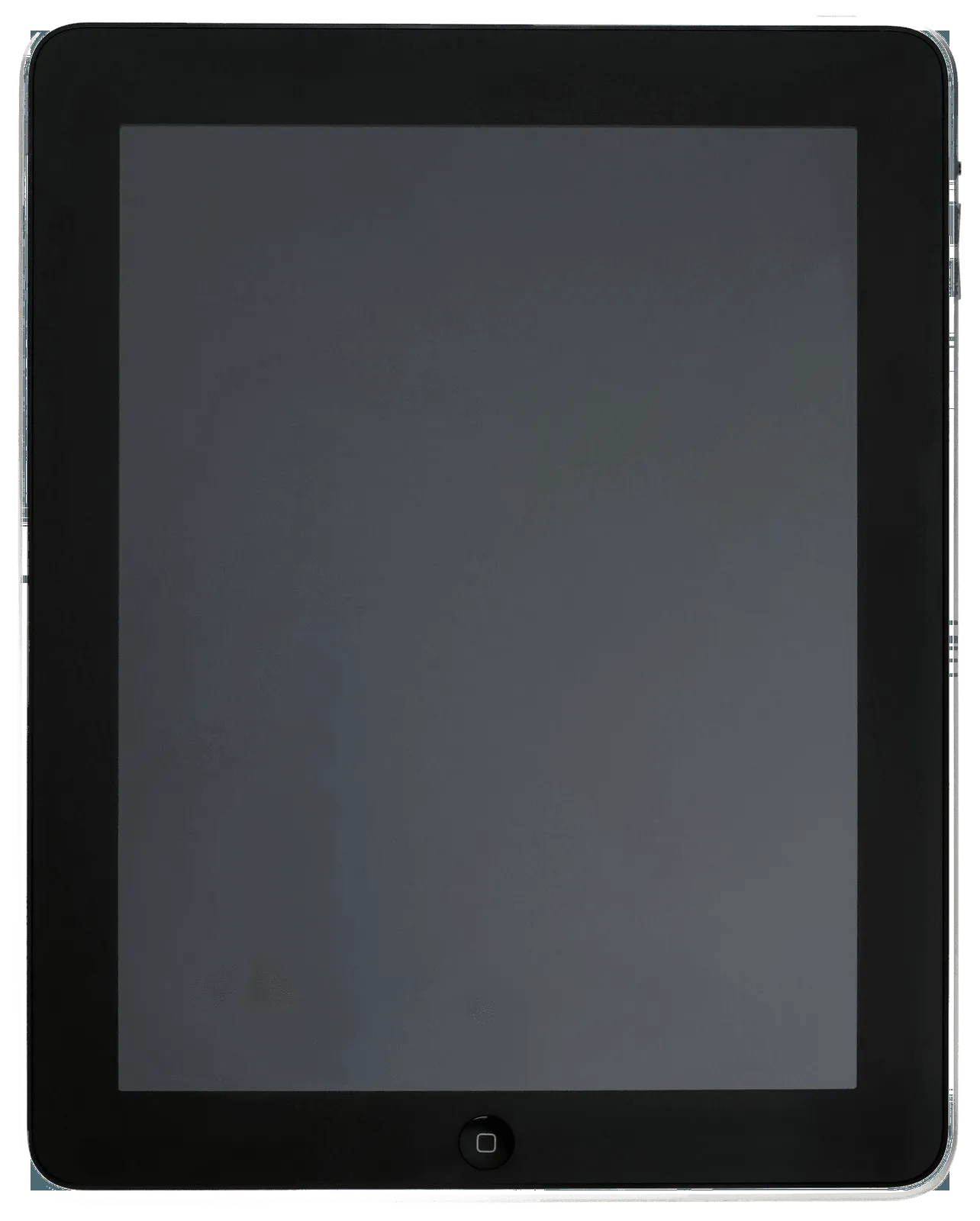
Apple put its first own design, the A4, into the first iPad in January 2010. It was a single processor core on a sliver of Samsung-made silicon about 7.3 millimetres square. Apple never said how many transistors it held. It stayed quiet through the A5 and A6 too.
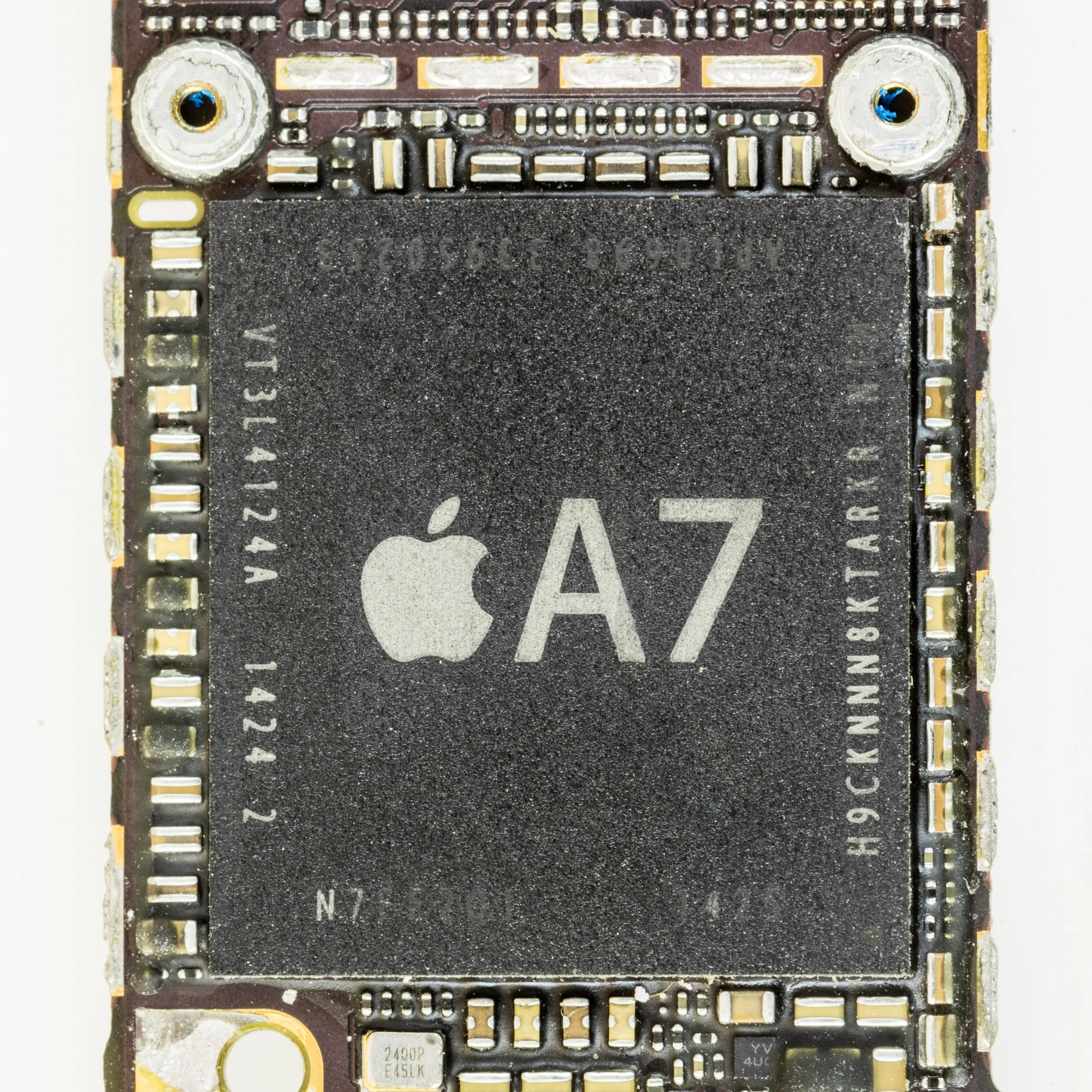
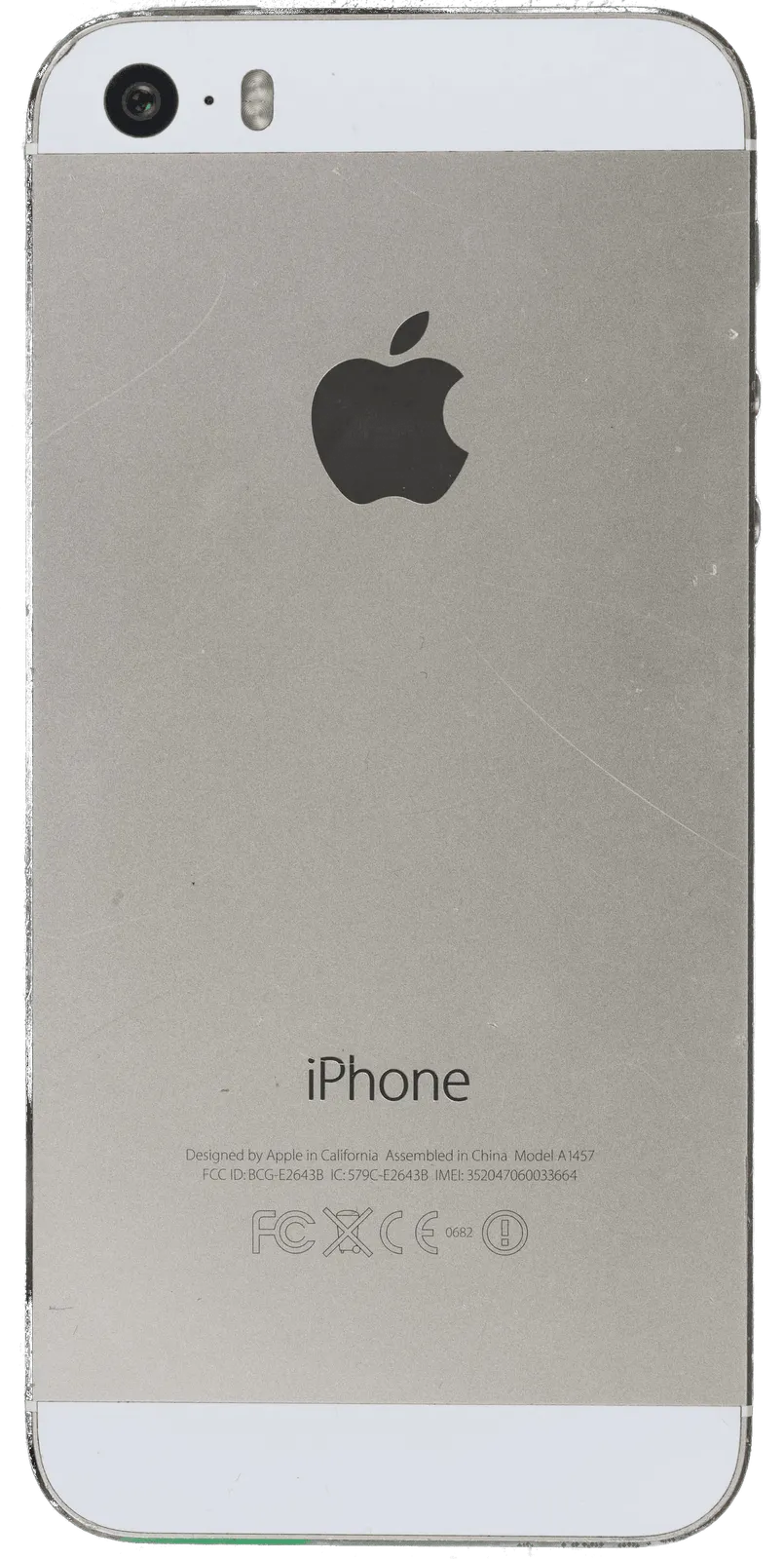
The first number came with the A7 in the iPhone 5s in 2013: “over 1 billion transistors”. From then on Apple read the count out at most launches.
2010–2012
2013
2020
2025
Since 2024
Apple beat Moore mostly with area. First it built bigger chips, then it joined chips together. On a linear scale the difference is brutal: the phone chips flatten into the floor, and the A17 Pro’s 19 billion barely registers next to the Ultras.
Fig. 1 · On a linear scale
Transistors per chip as published by Apple, billions. Blue: A-series phone and iPad chips. Every chip with a published count.
| M3 Ultra | March 2025 | 184bn |
|---|---|---|
| M2 Ultra | June 2023 | 134bn |
| M1 Ultra | March 2022 | 114bn |
| M3 Max | October 2023 | 92bn |
| M2 Max | January 2023 | 67bn |
| M1 Max | October 2021 | 57bn |
| M2 Pro | January 2023 | 40bn |
| M3 Pro | October 2023 | 37bn |
| M1 Pro | October 2021 | 33.7bn |
| M4 | May 2024 | 28bn |
| M3 | October 2023 | 25bn |
| M2 | June 2022 | 20bn |
| A17 Pro | September 2023 | 19bn |
| M1 | November 2020 | 16bn |
| A16 Bionic | September 2022 | nearly 16bn |
| A15 Bionic | September 2021 | 15bn |
| A14 Bionic | September 2020 | 11.8bn |
| A13 Bionic | September 2019 | 8.5bn |
| A12 Bionic | September 2018 | 6.9bn |
| A11 Bionic | September 2017 | 4.3bn |
| A10 Fusion | September 2016 | 3.3bn |
| A8 | September 2014 | 2bn |
| A7 | September 2013 | over 1bn |
02 · The silicon
Enrique Jiménez / CC BY-SA 2.0
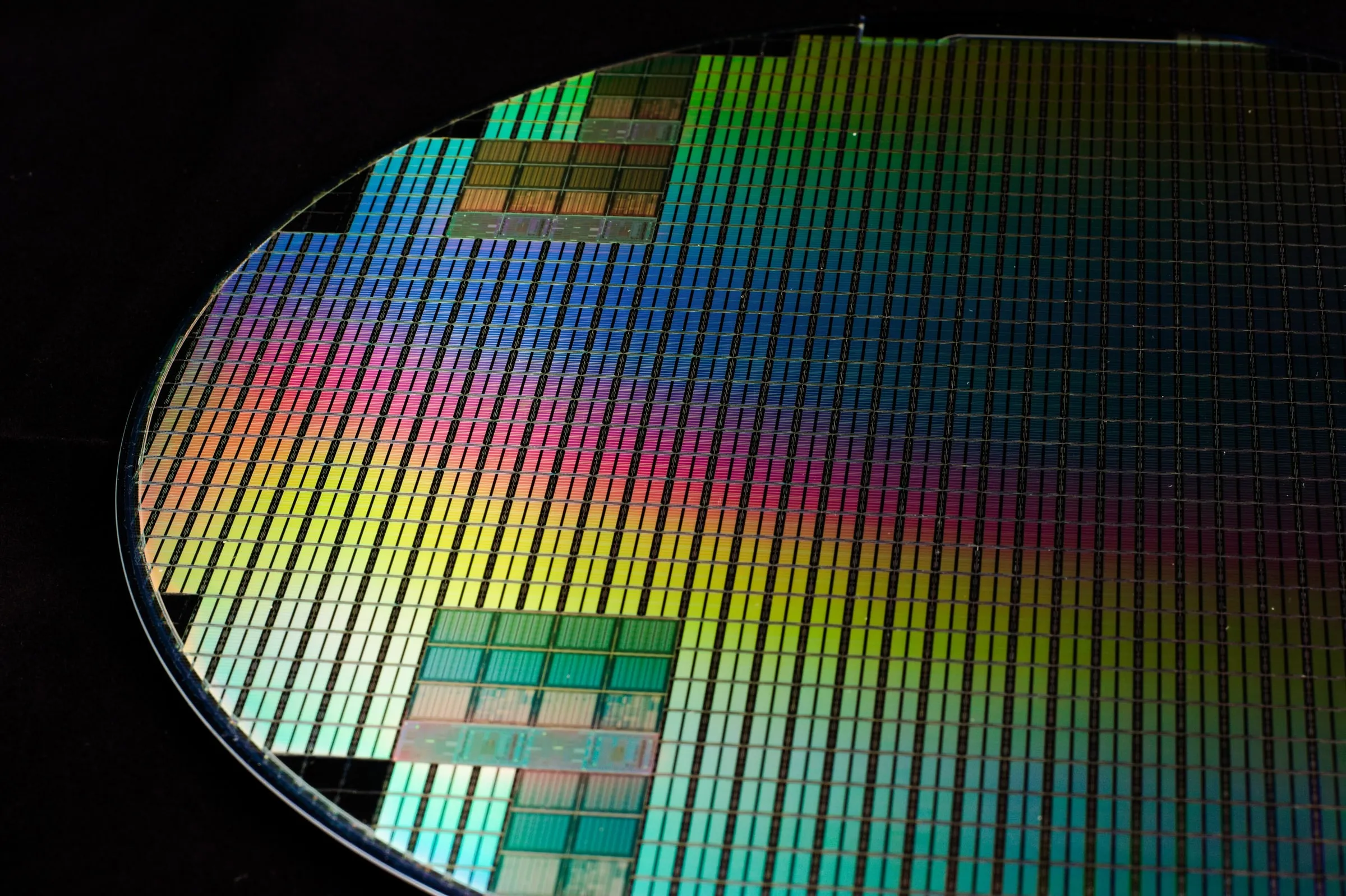
A chip’s die is the actual rectangle of silicon cut from the wafer. Its size tells a quieter story than the transistor counts.
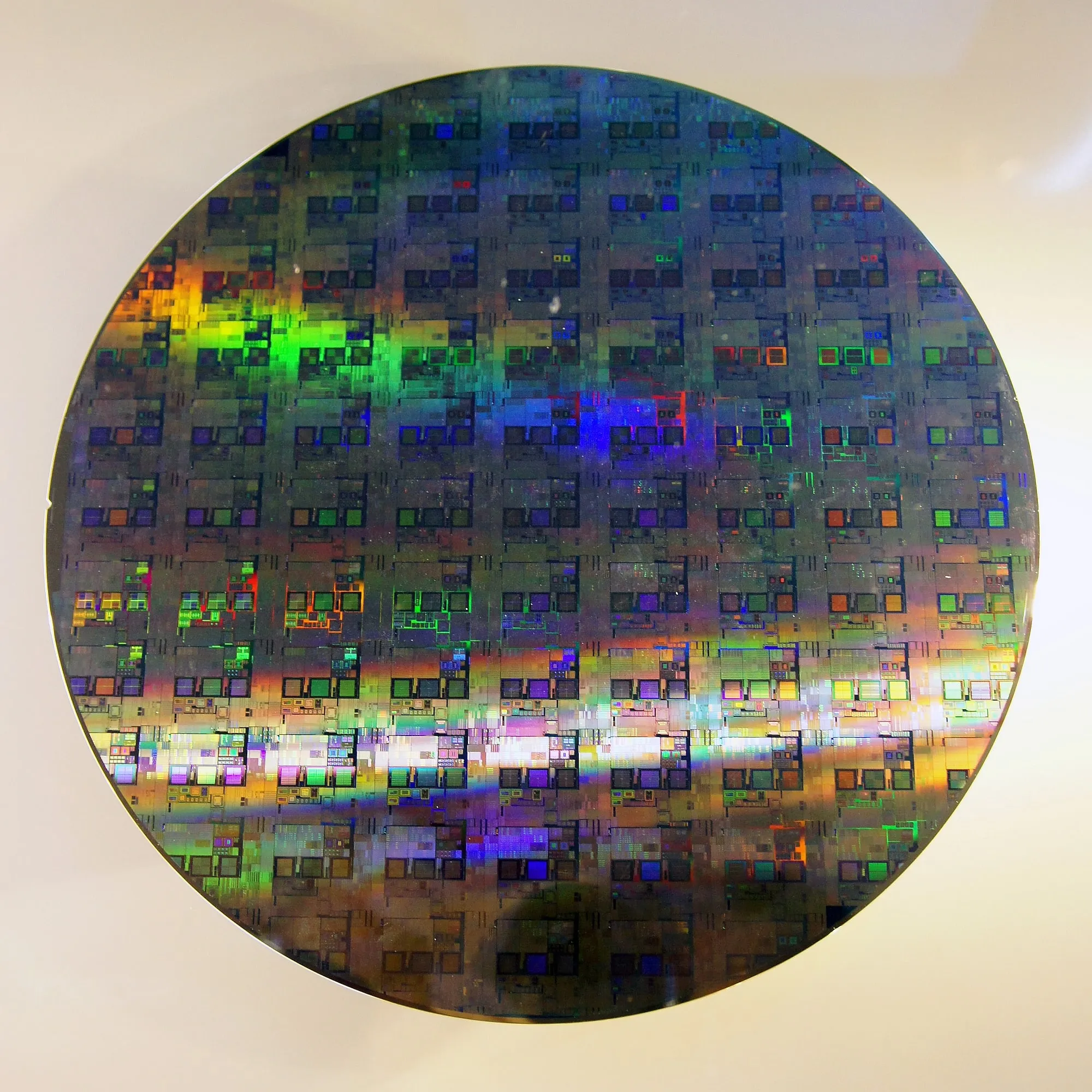
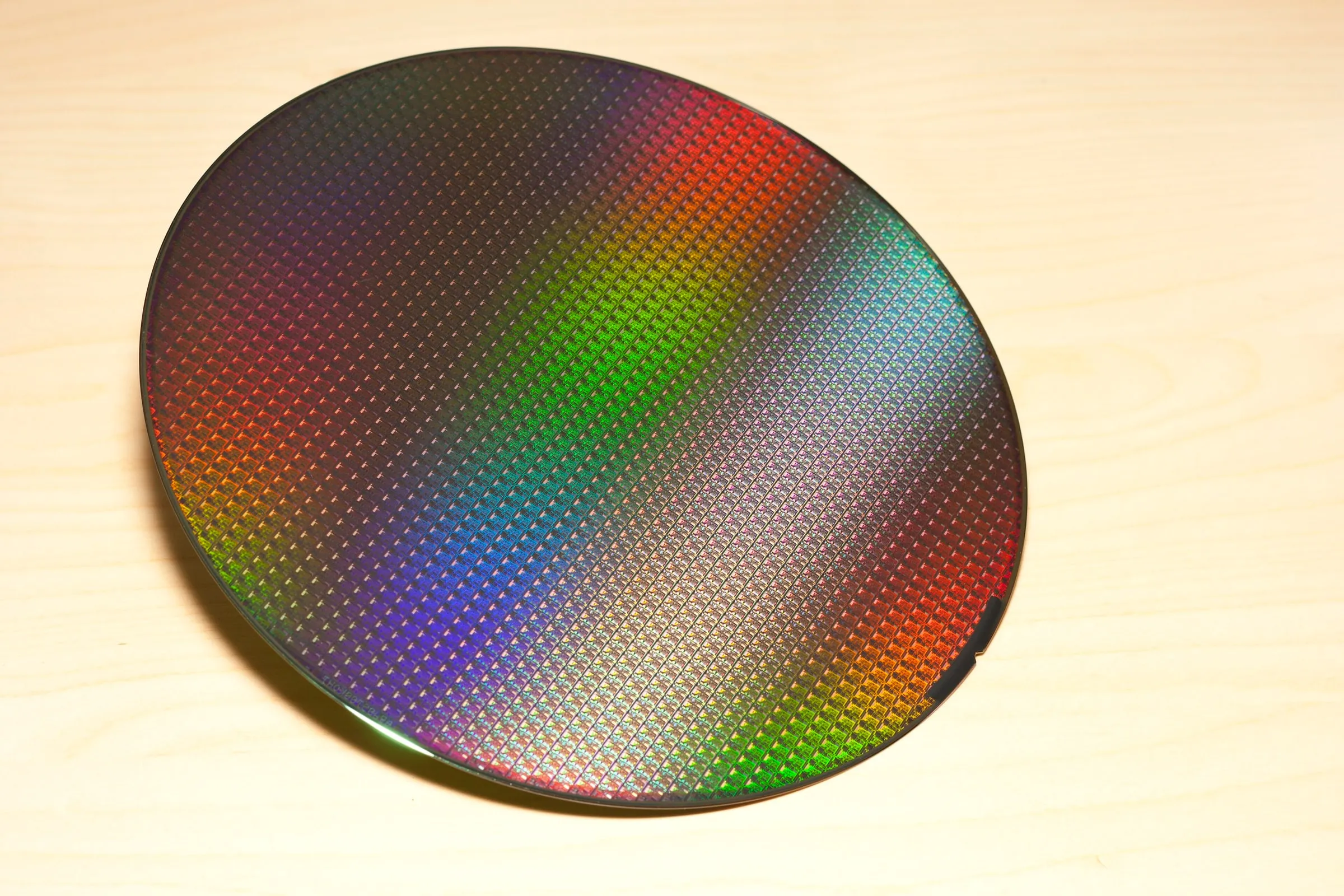
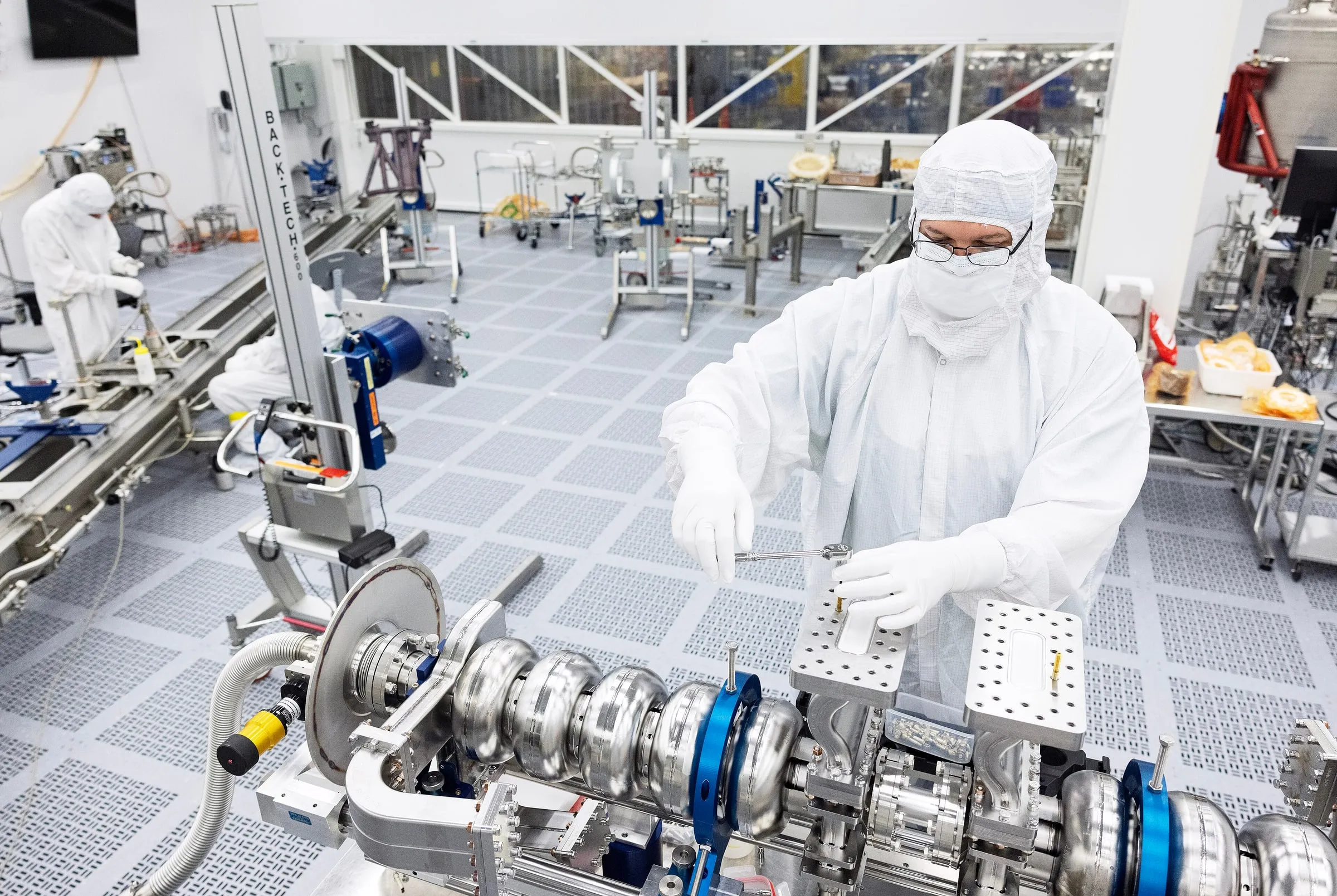
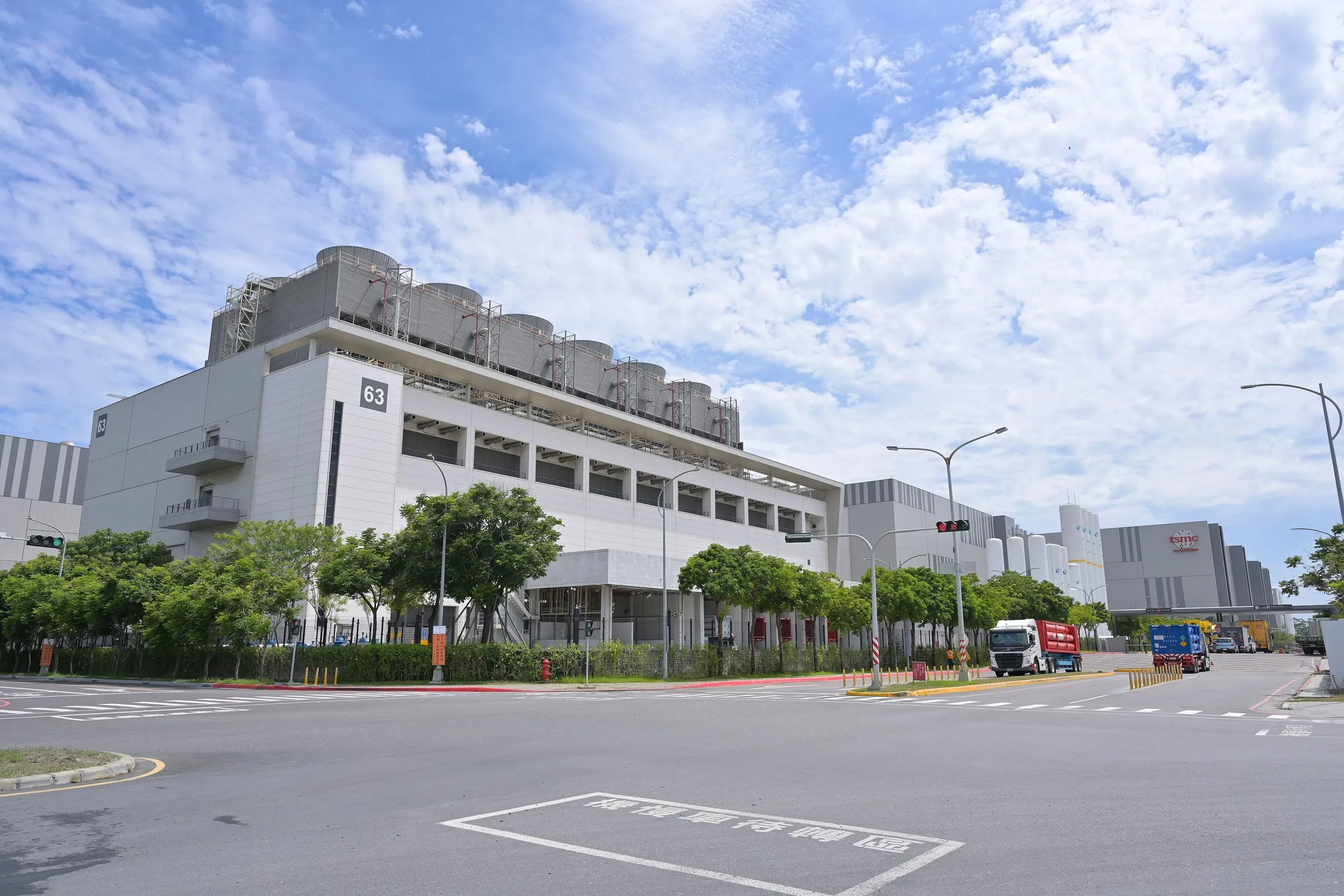
Cut from a disc.
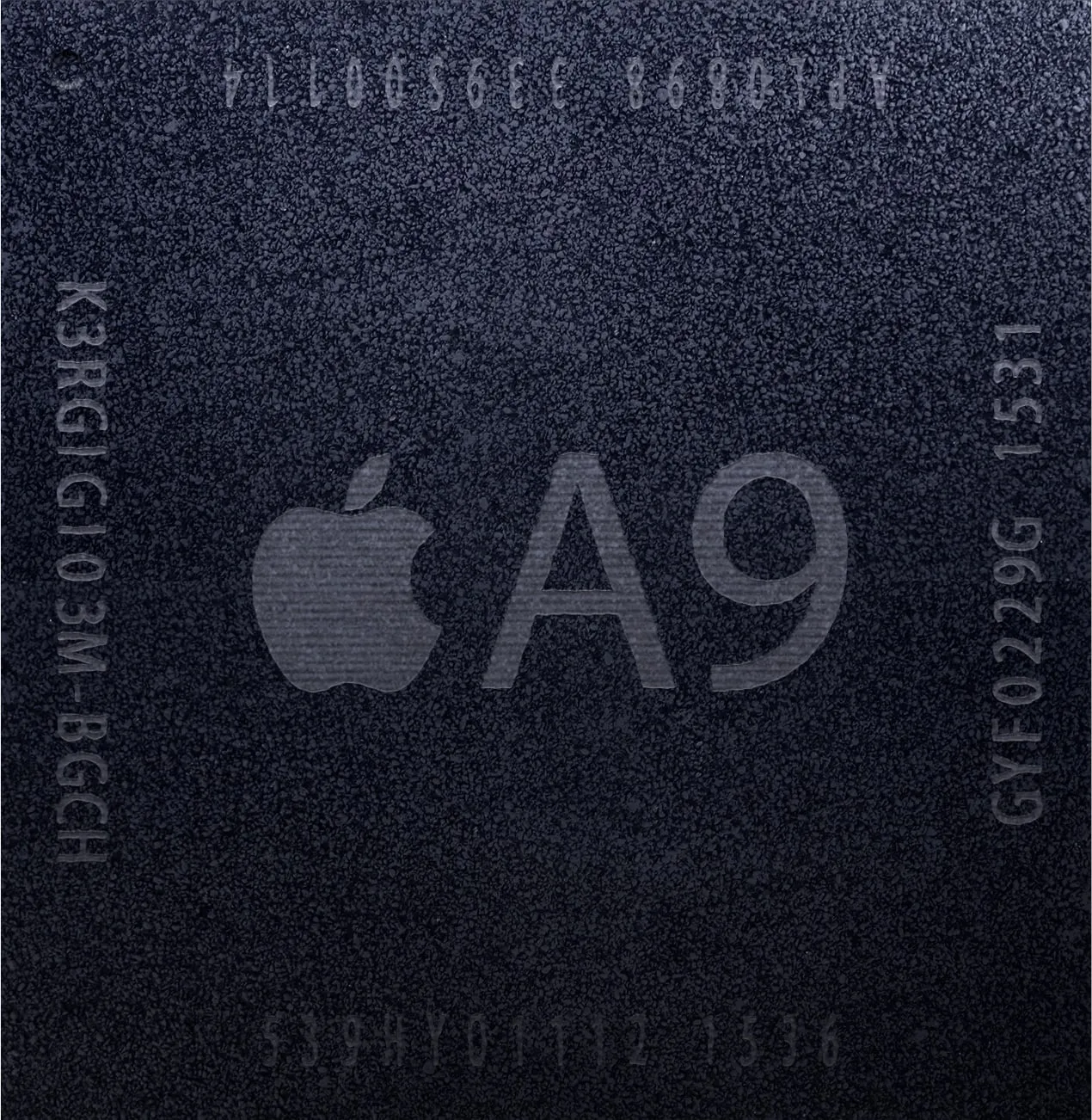
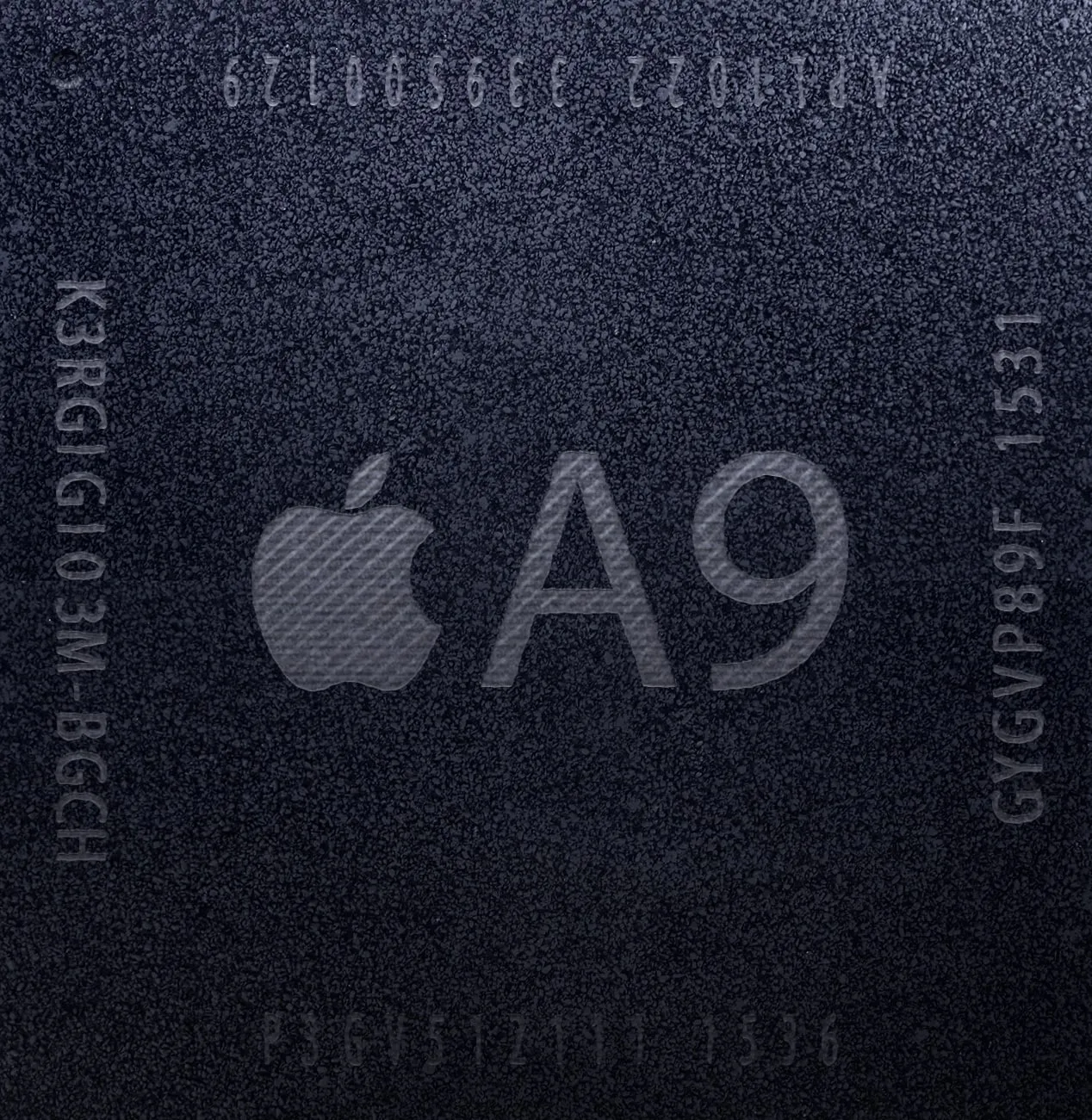
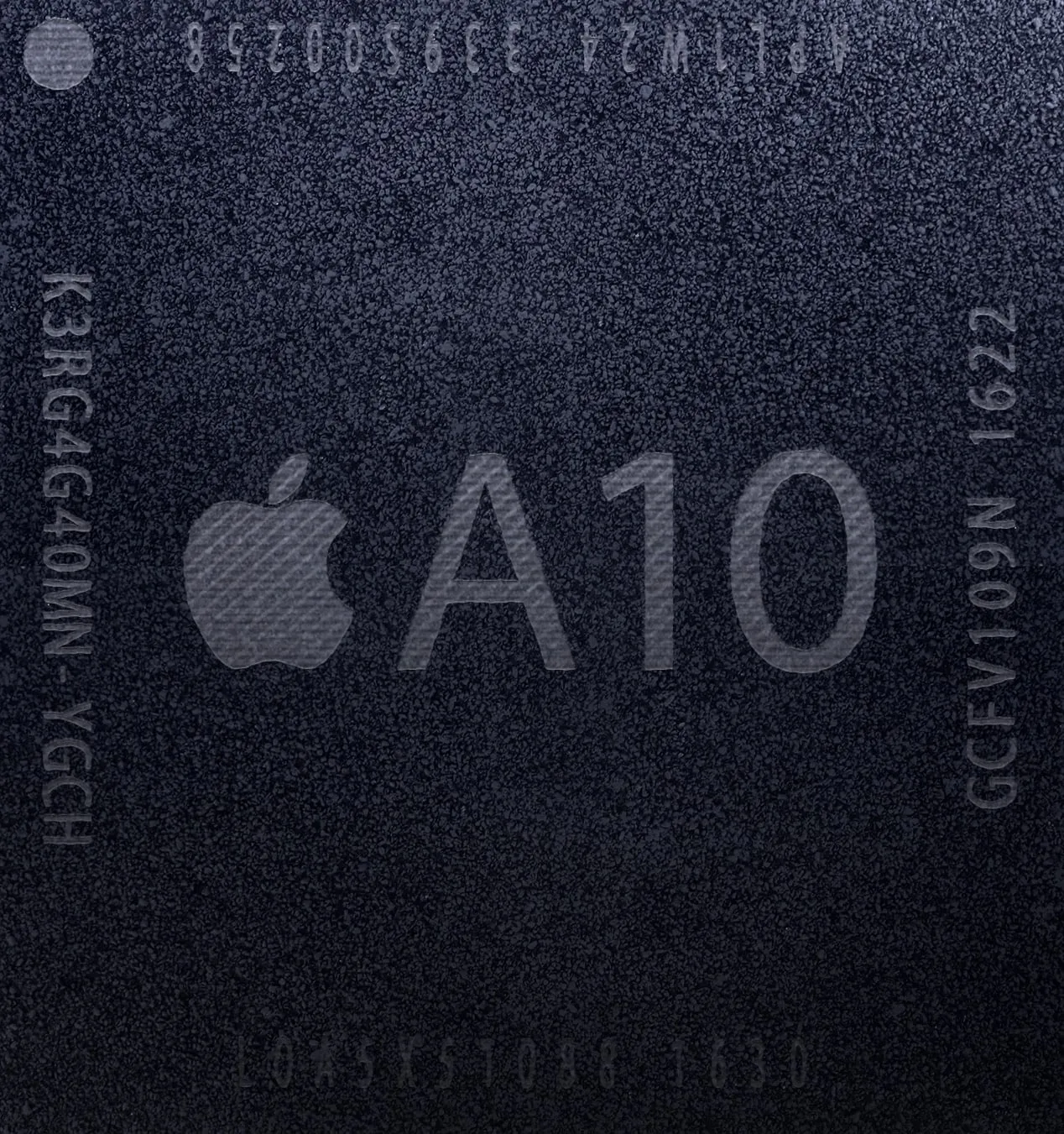
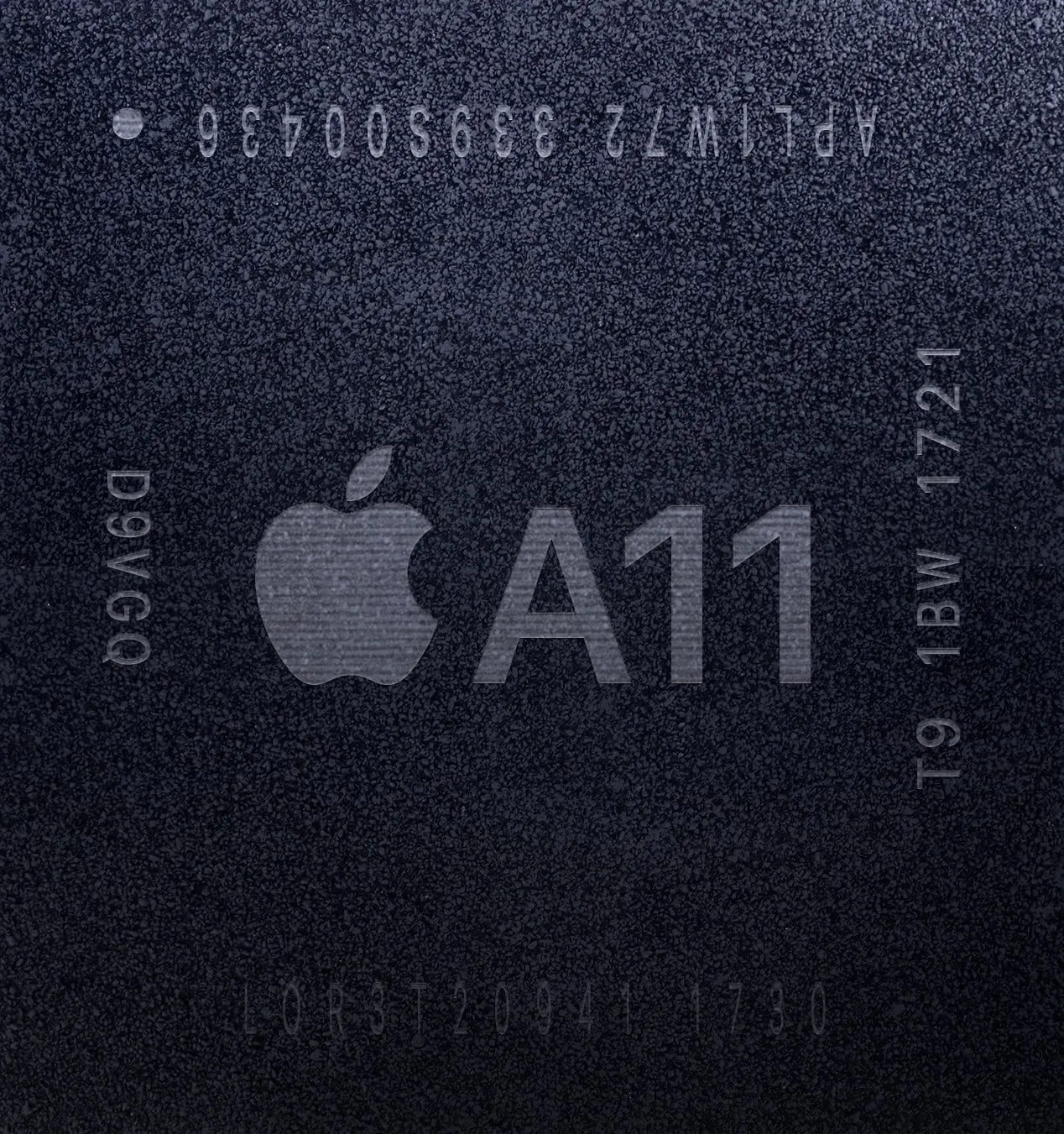
Under the package, every one of these is a rectangle of silicon. The lids look almost identical. The switches inside do not.
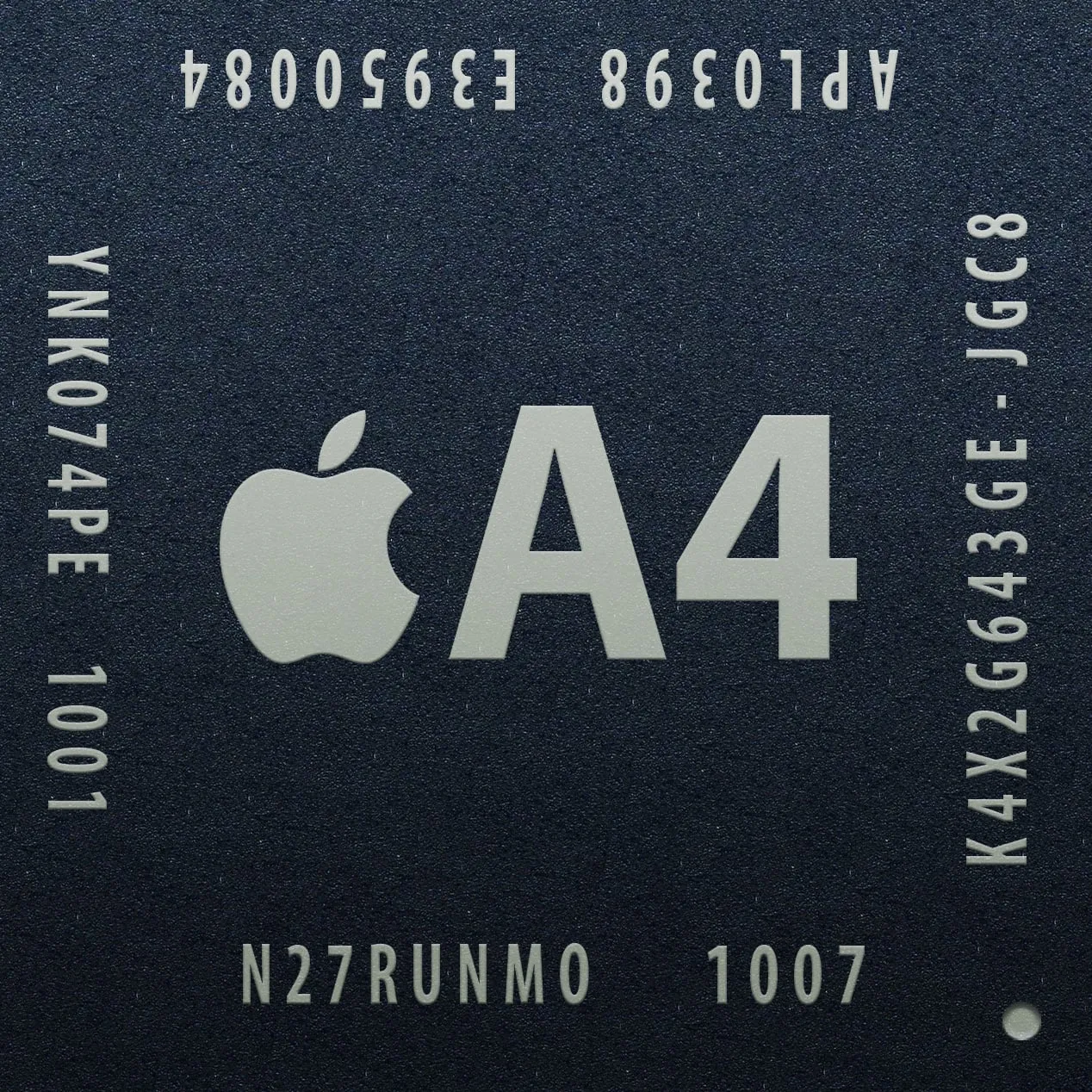 A4 · 2010
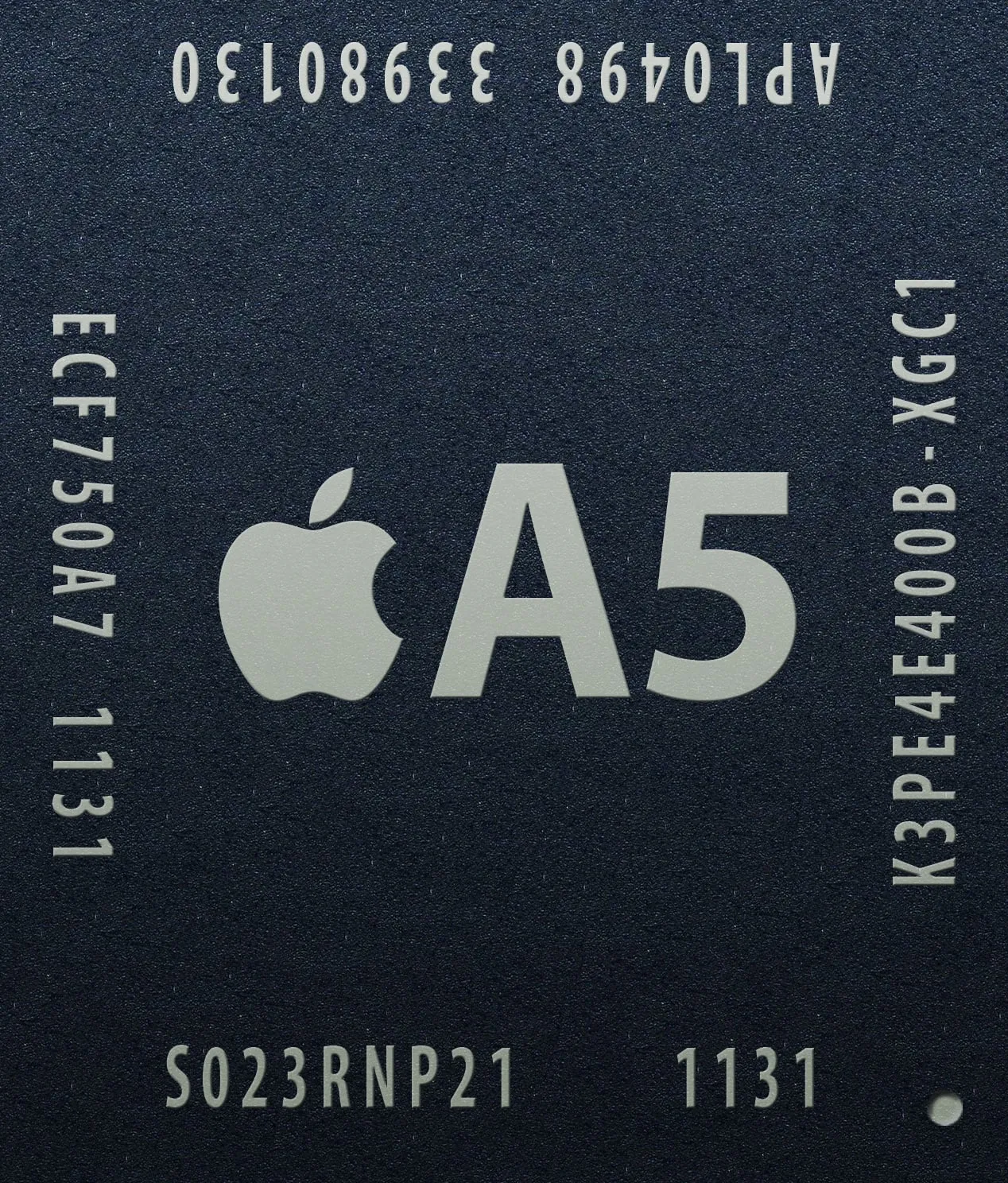 A5 · 2011
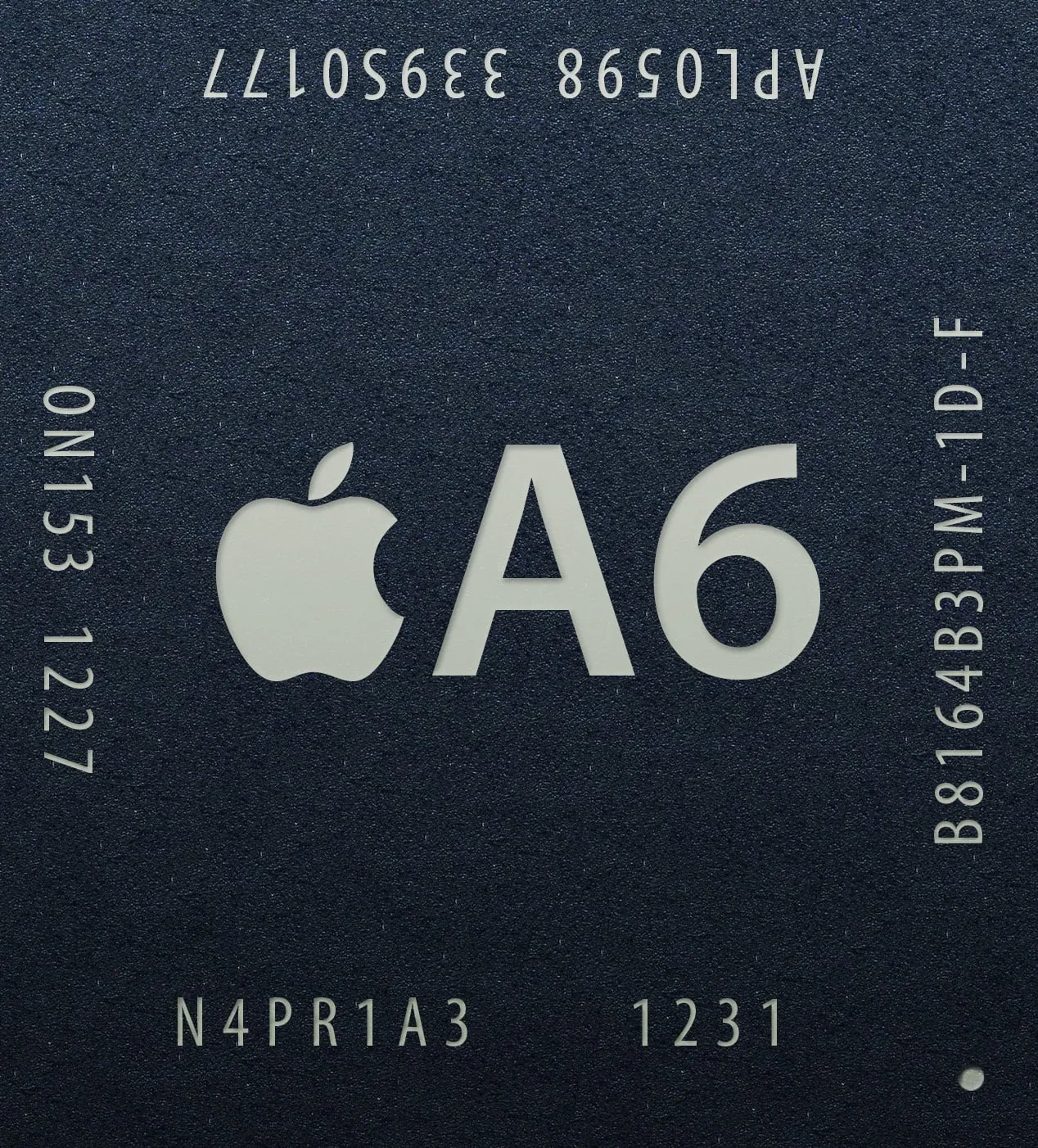 A6 · 2012
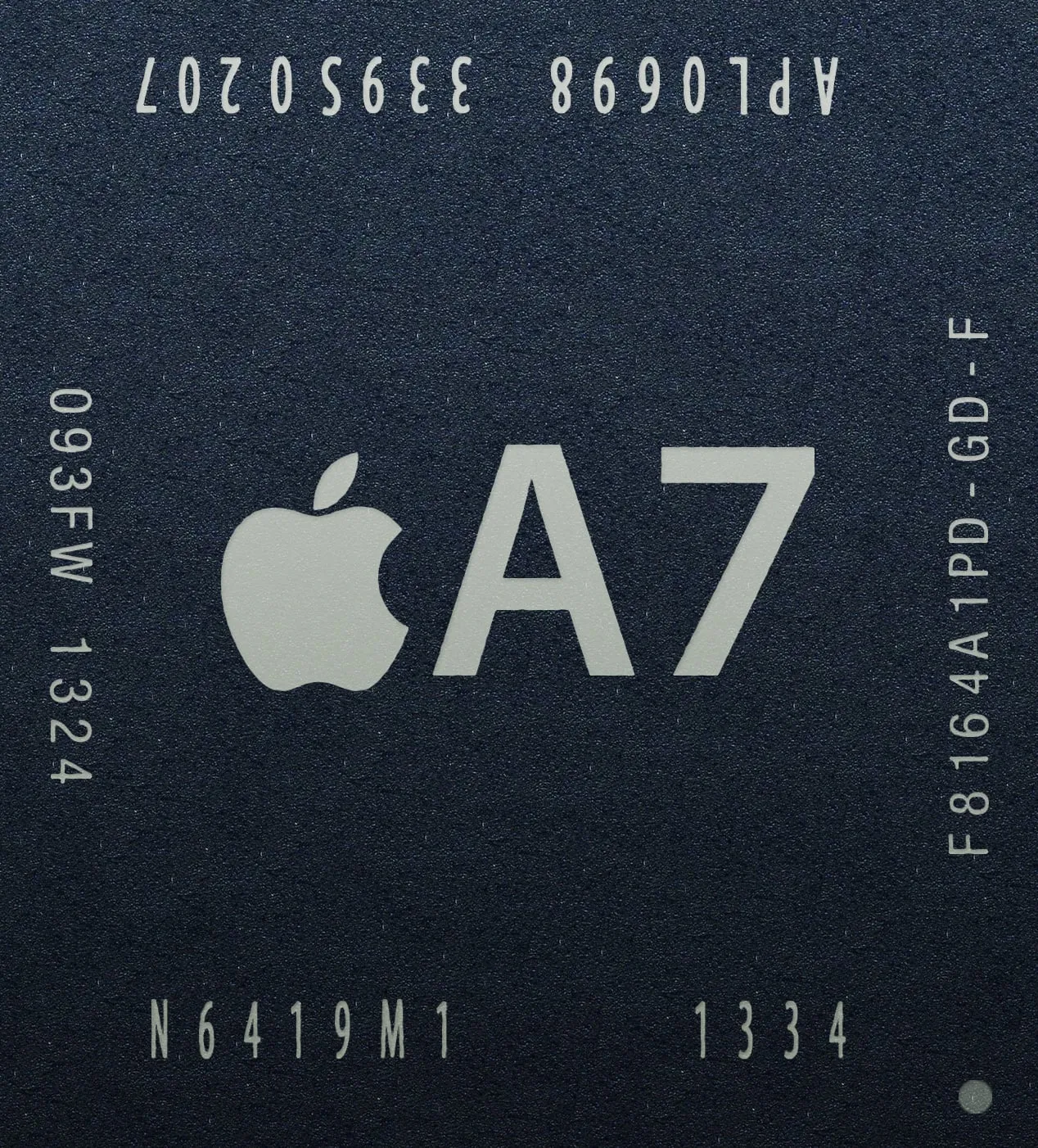 A7 · 2013
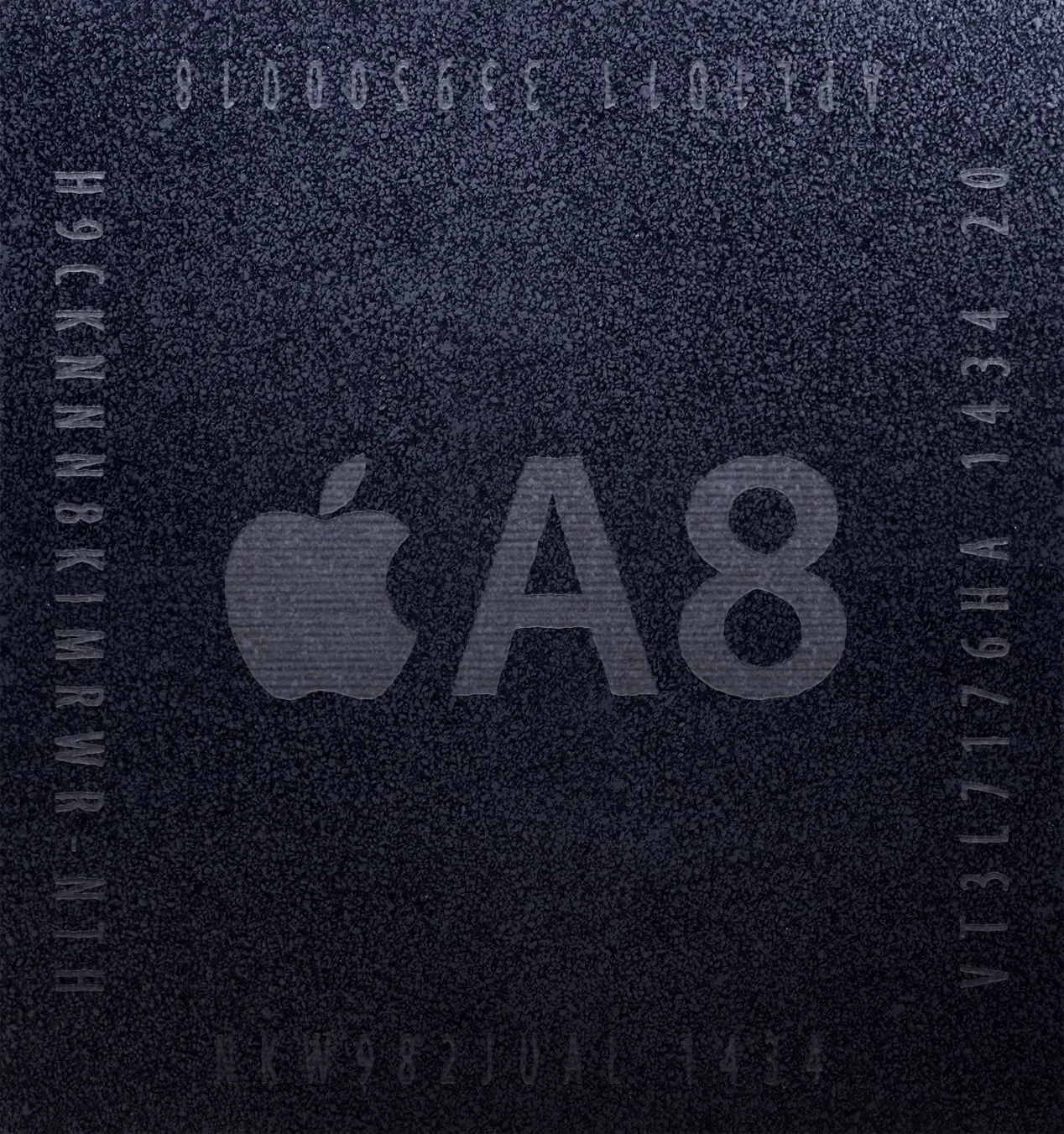 A8 · 2014
 A9 · APL0898
 A9 · APL1022
 A10 · 2016
 A11 · 2017
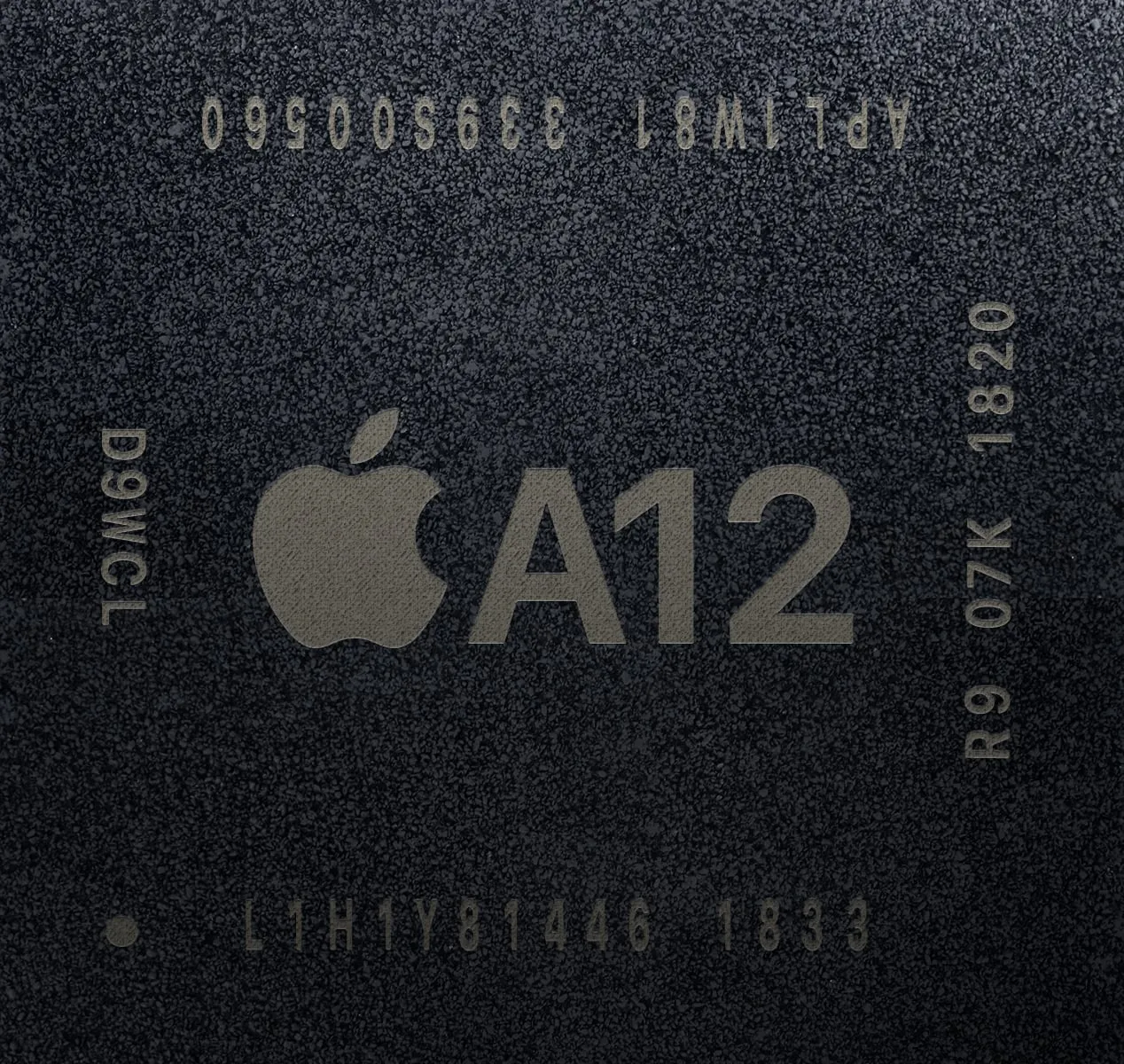 A12 · 2018
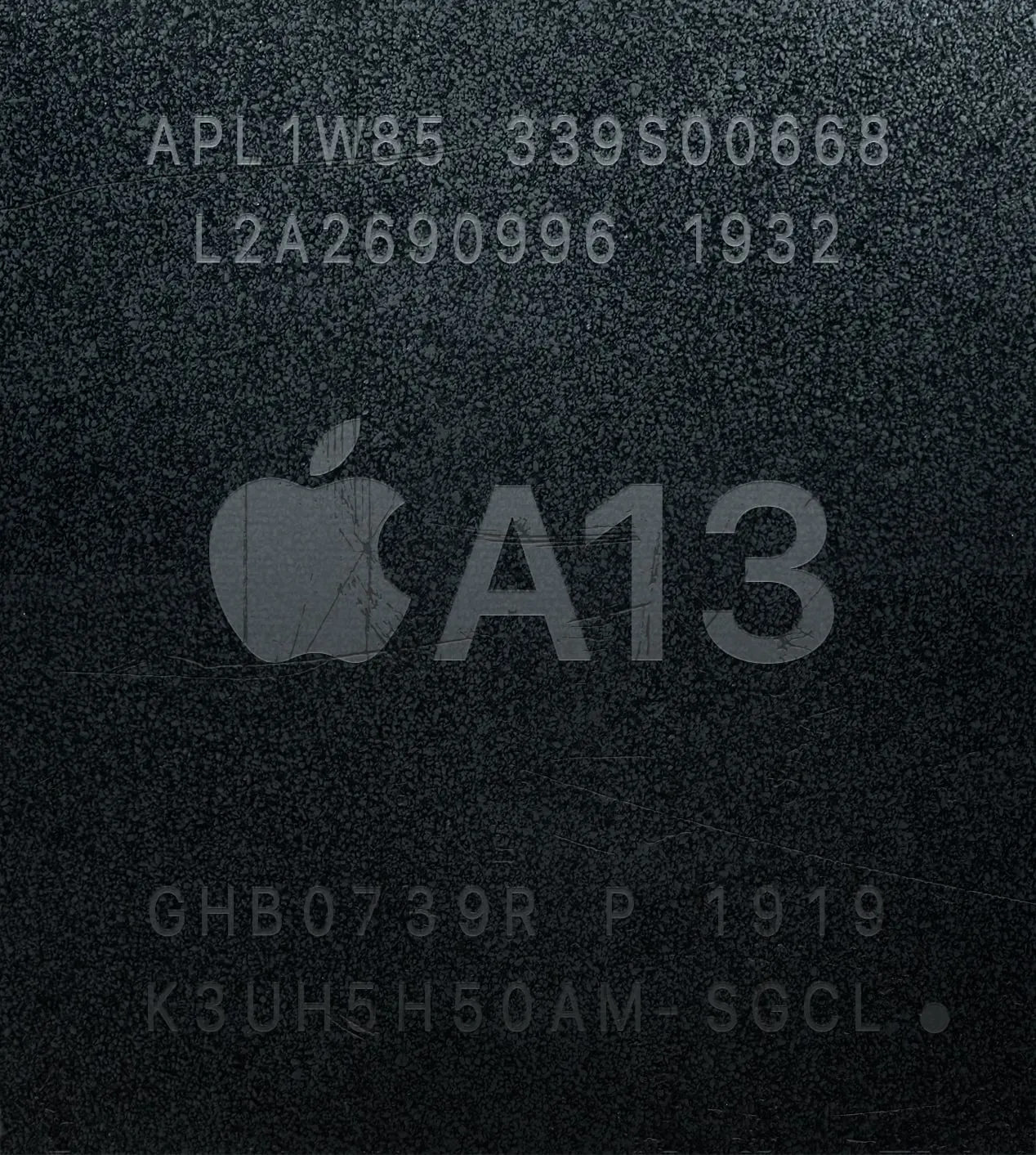 A13 · 2019
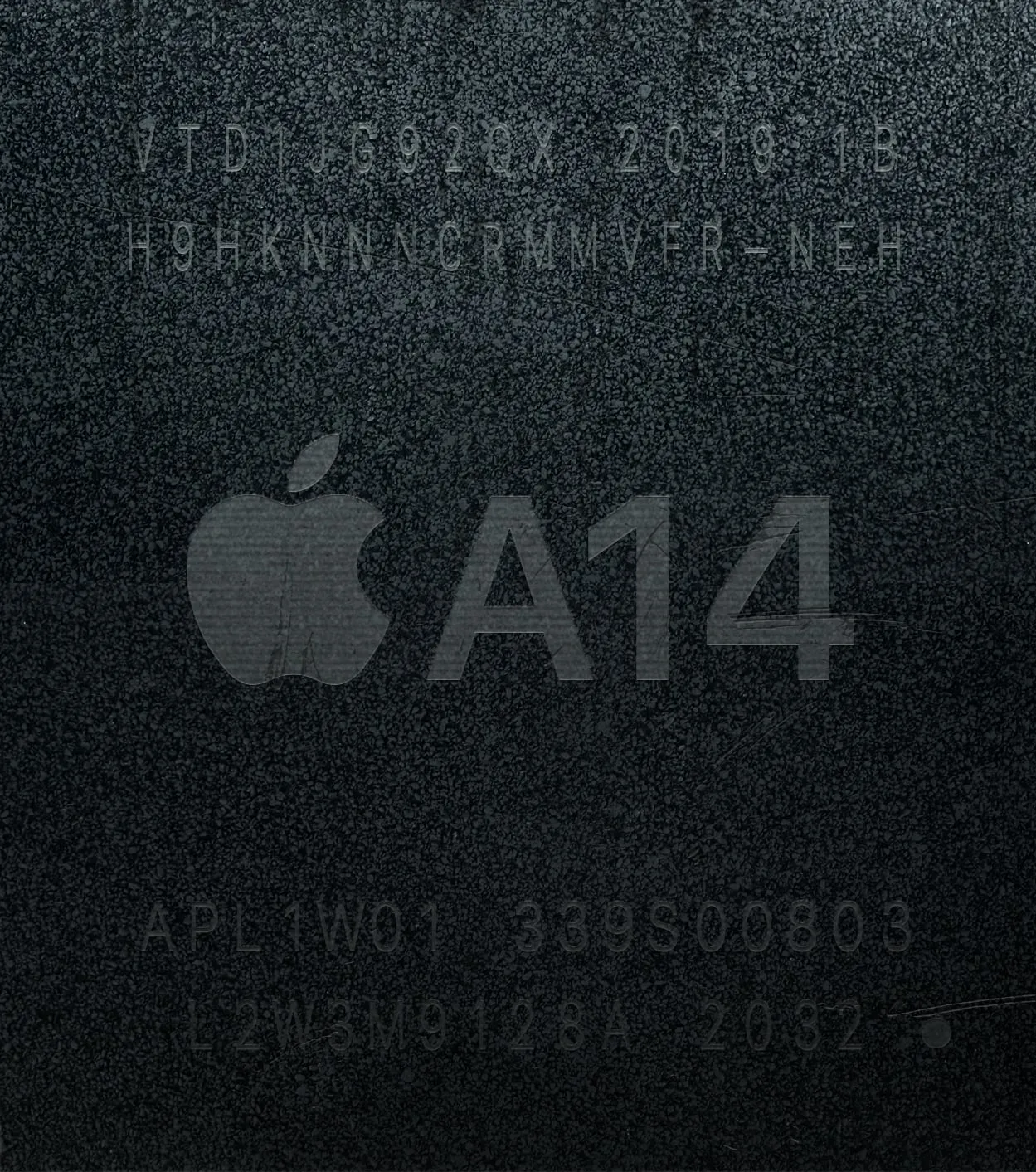 A14 · 2020
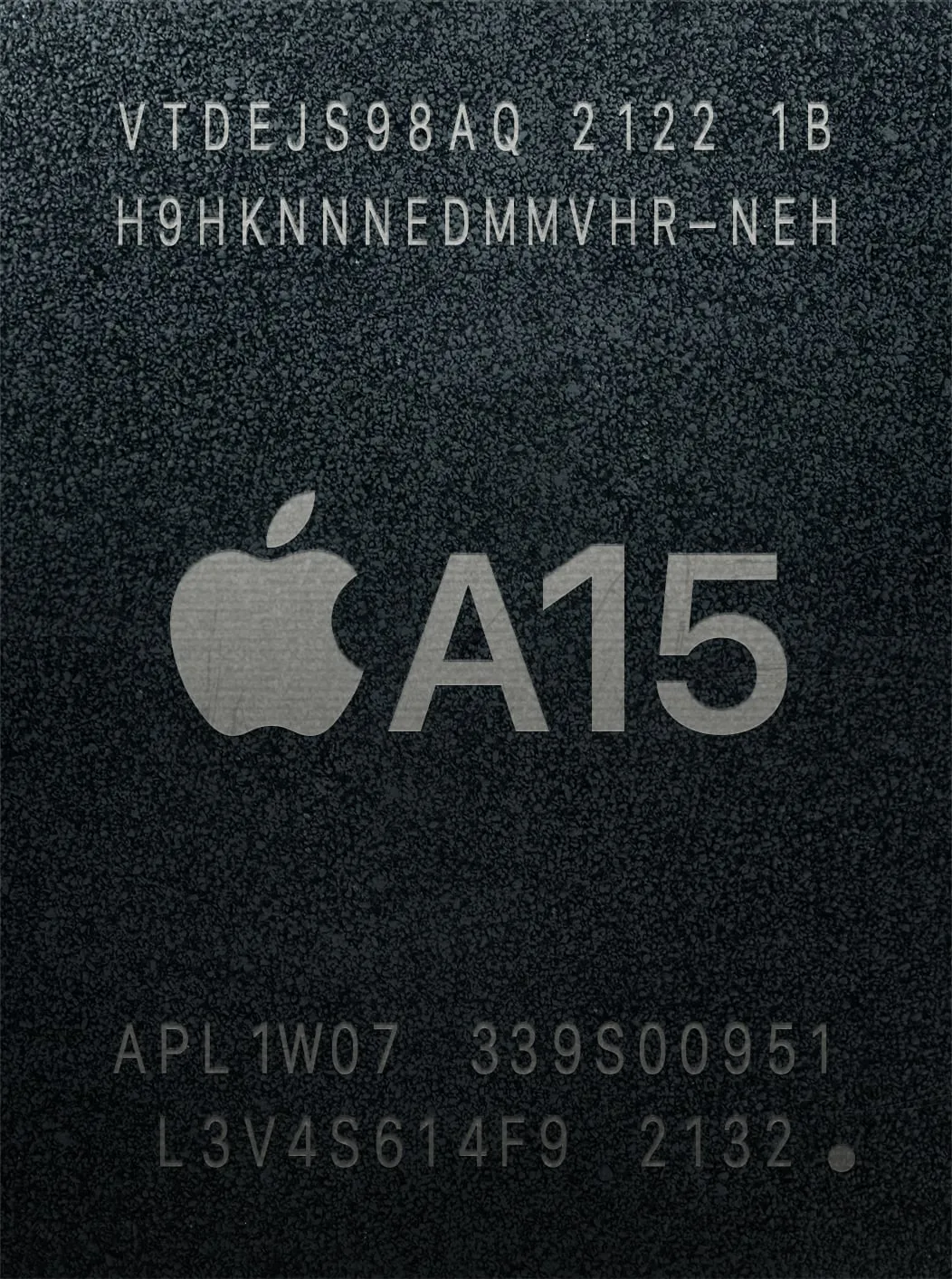 A15 · 2021
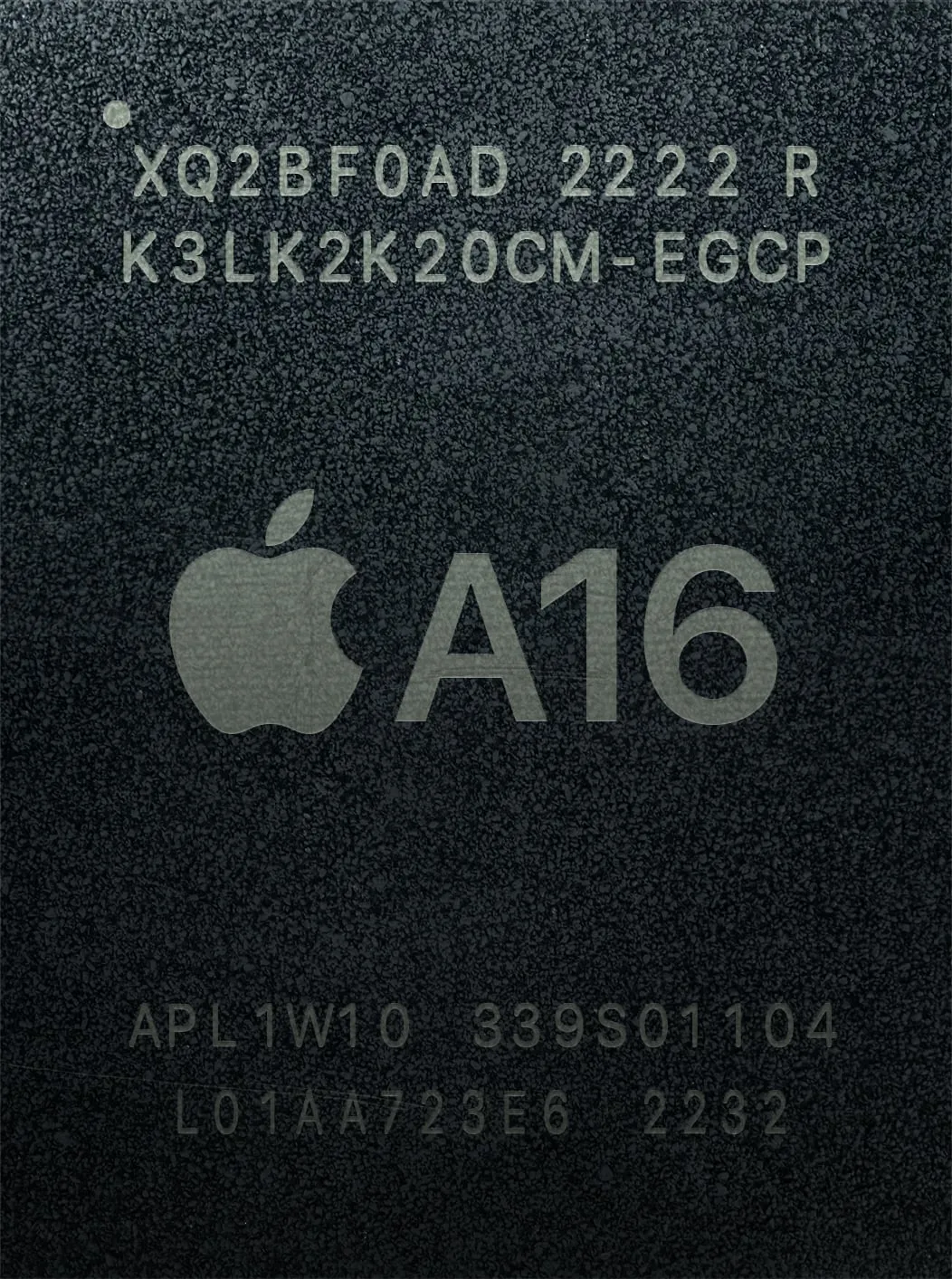 A16 · 2022
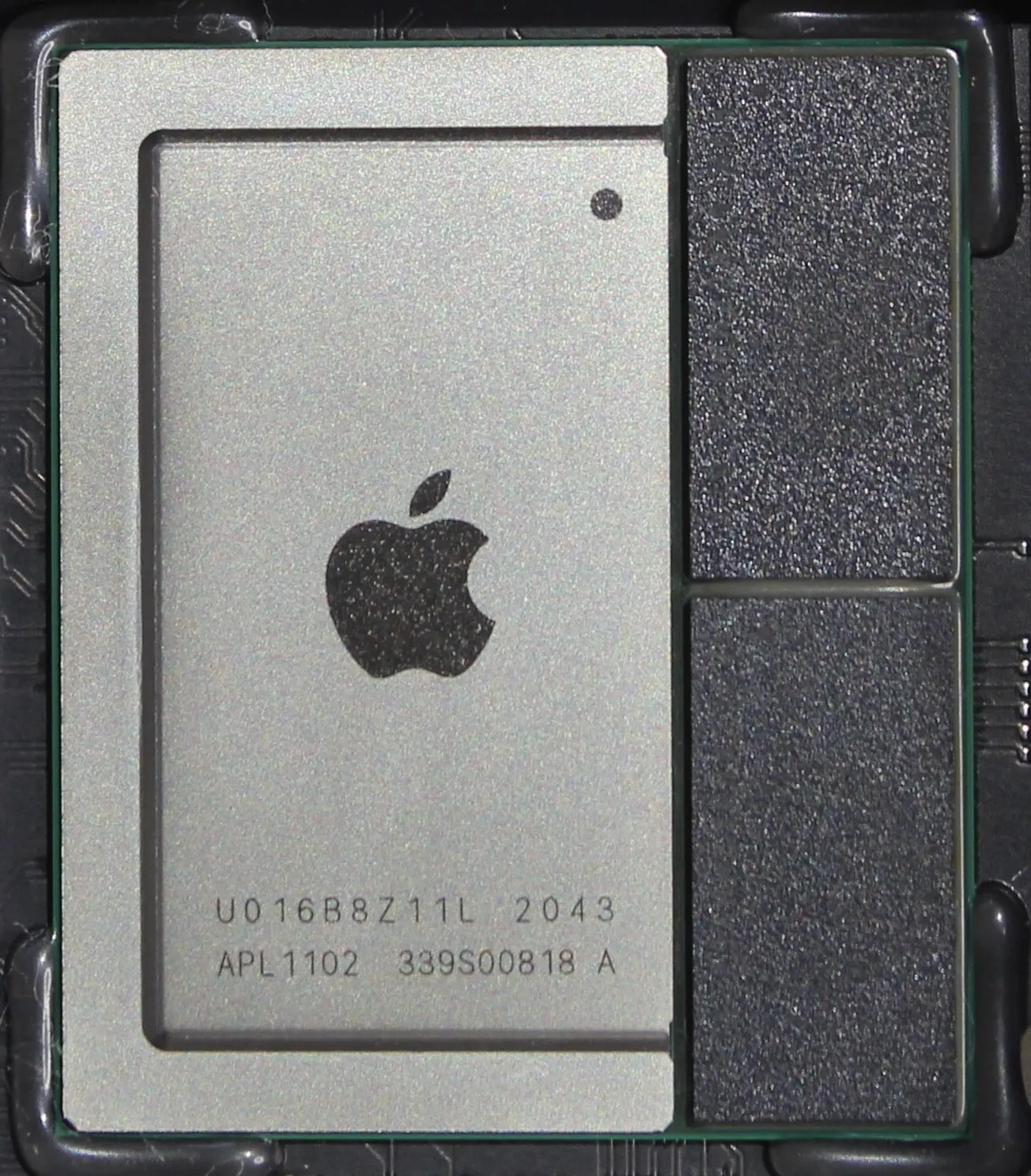 M1 · 2020
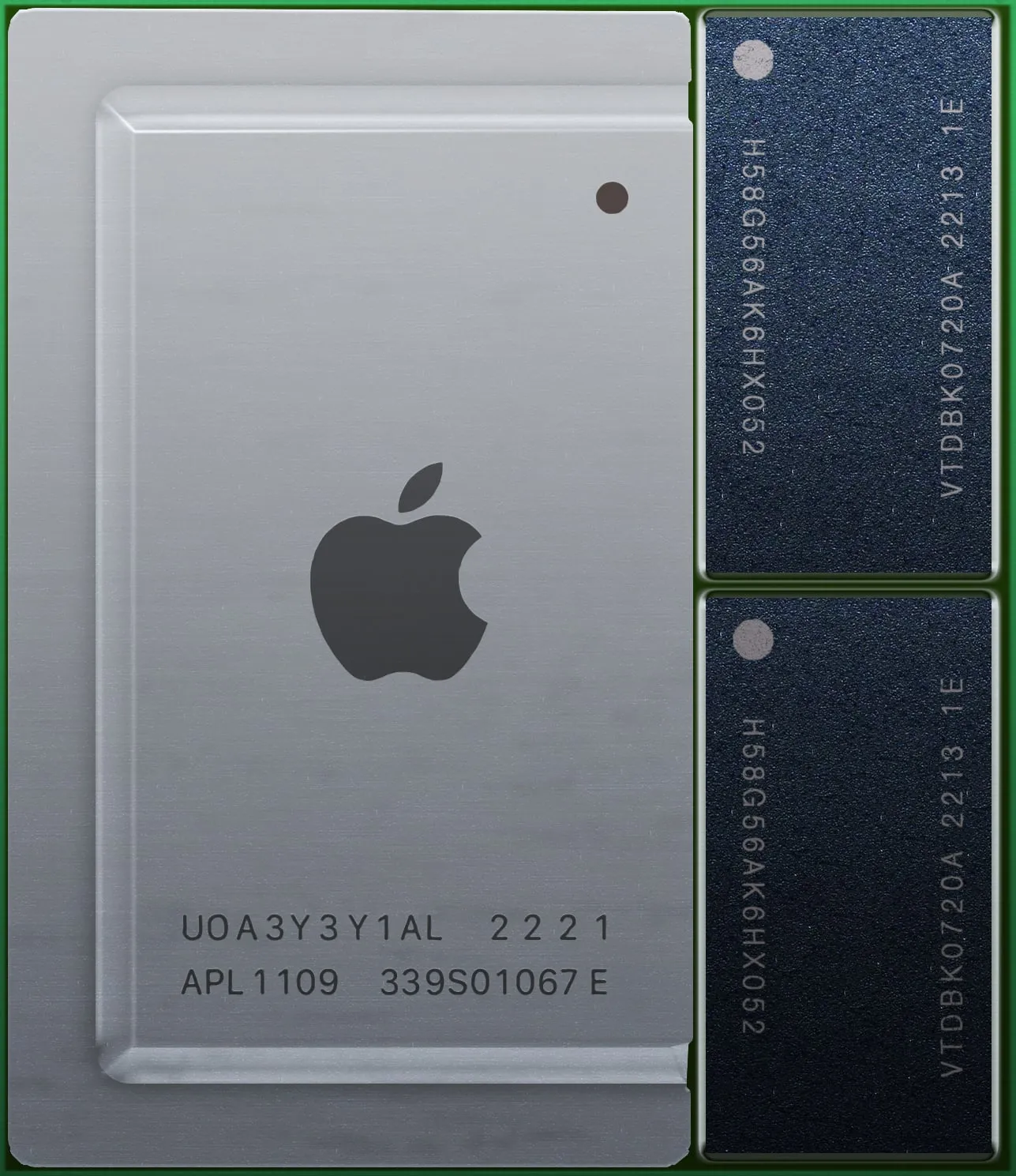 M2 · 2022
Tap any chip to open it large.
Every iPhone chip measured since 2012 has fitted between 83 and 125 square millimetres. The A12 of 2018 was the smallest at 83.27 mm². The A10 of 2016 was the largest at 125 mm². This year’s A20 Pro measures about 98 mm², almost exactly the size of its predecessor.
2010 · A4
2011–2026 · A-series
Inside
2020–2022 · M-series
Measured silicon
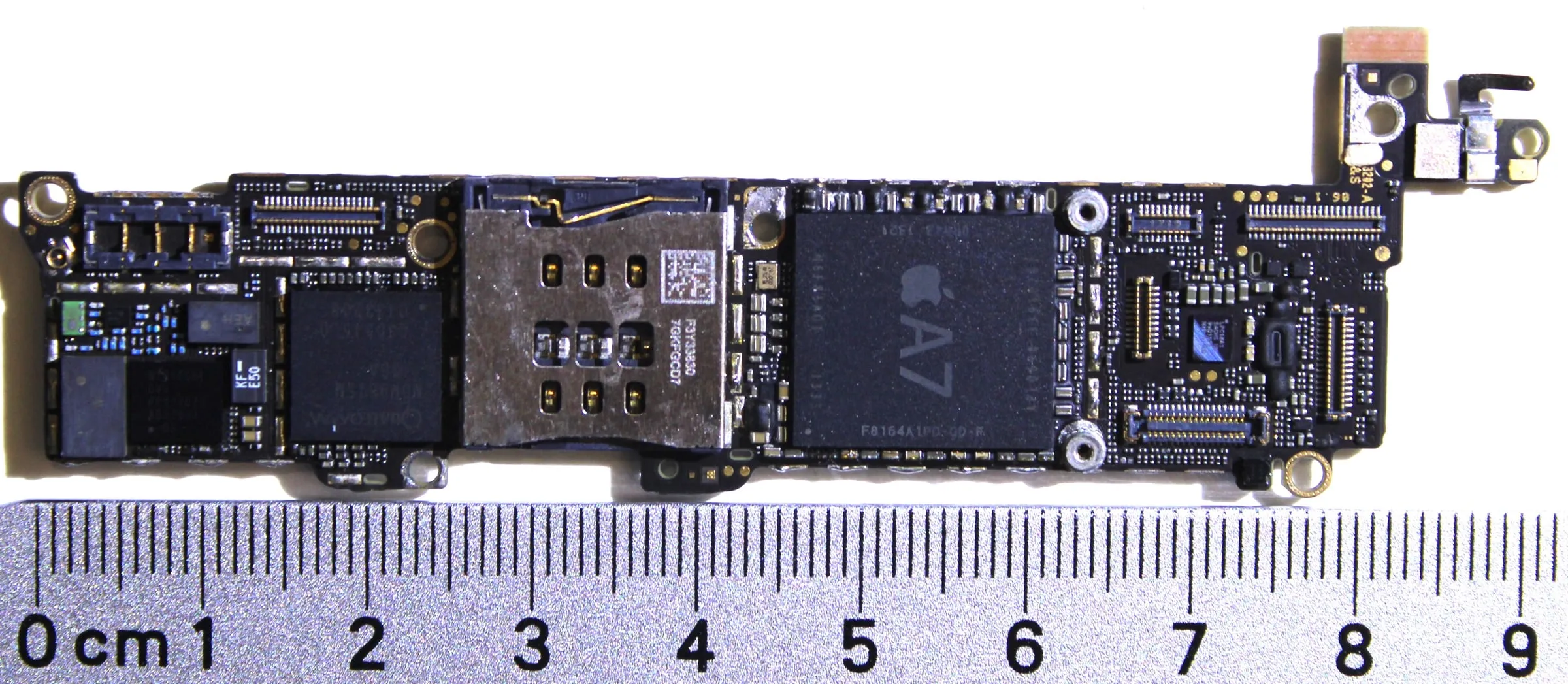
Fig. 2 · Sized by count
Every chip with a published count, in launch order. Area is the transistor count: each grid square is one billion, the same unit as the tray above.
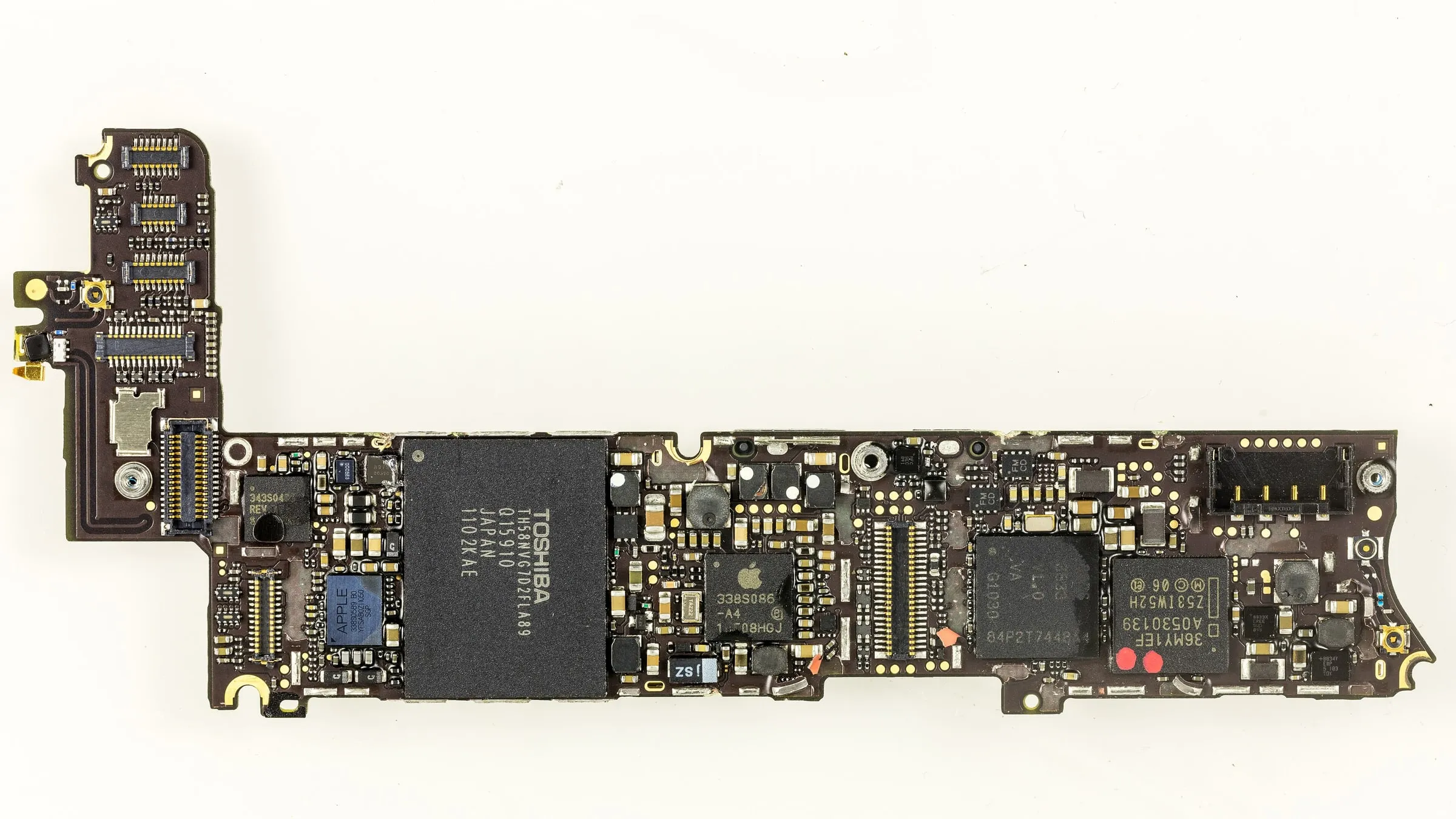
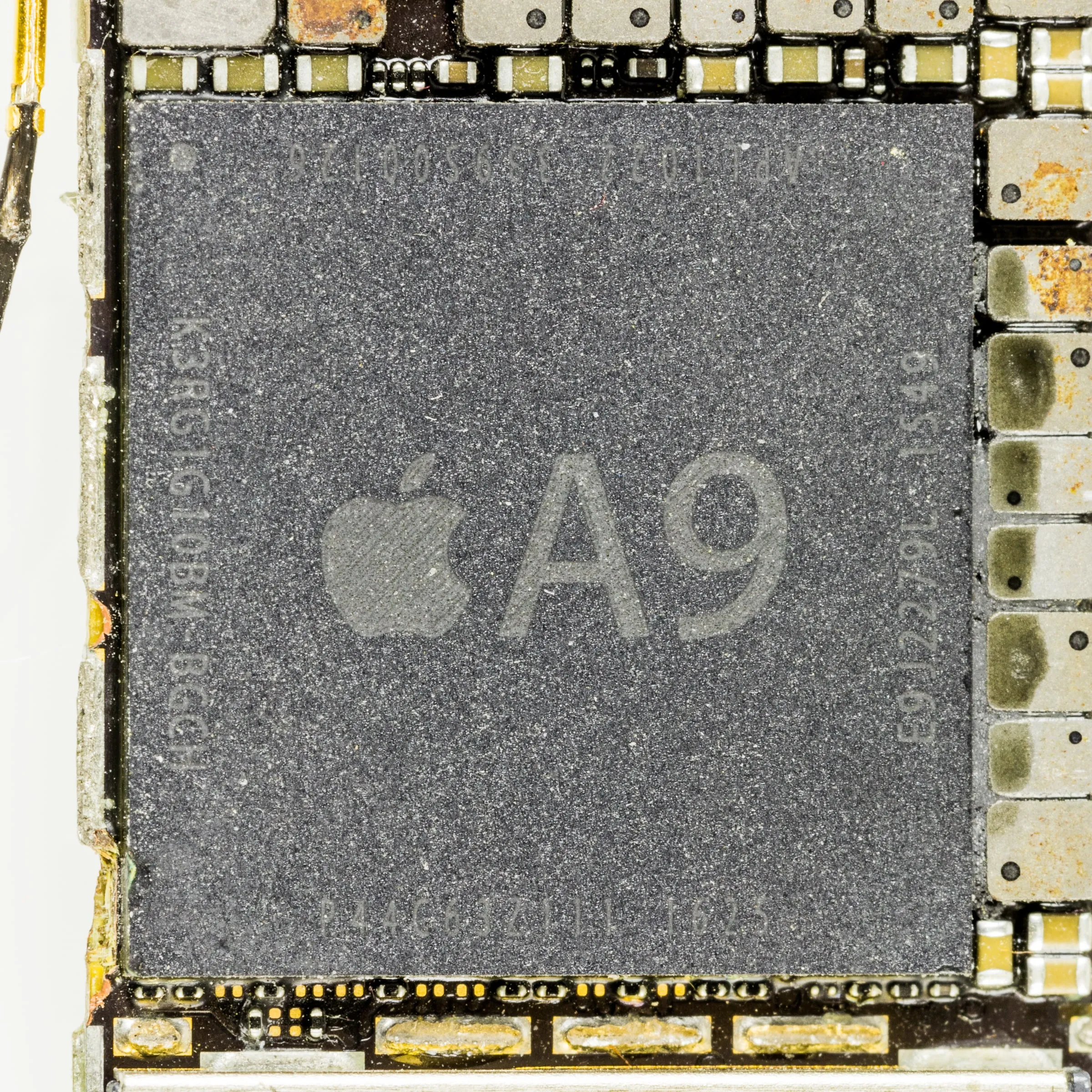
The A4, A7 and A9 where they live: soldered to the board, ringed by components.
03 · Moore’s law, checked
Doubling time is the cleanest way to compare growth across different spans. Take two chips from the same line, divide the years between them by the number of doublings, and see how it stacks up against Moore’s two years.
From the A7 to the A14, the iPhone’s flagship chip doubled its transistor count every 1.97 years, almost exactly on Moore’s schedule. After 2020 the pace halved. The phone flagship, the base Mac chip and the Ultras all slowed to a doubling about every four and a third years. The Max chips held up best, at just under three years from 2021 to 2023.
Fig. 3 · Doubling time
Years for the transistor count to double, between two chips in the same line. Shorter is faster.
| A7 → A14 | iPhone flagship, 2013–2020 | 1.97 |
|---|---|---|
| A14 → A17 Pro | iPhone flagship, 2020–2023 | 4.35 |
| M1 → M4 | Base Mac chip, 2020–2024 | 4.32 |
| M1 Max → M3 Max | Max chip, 2021–2023 | 2.94 |
| M1 Ultra → M3 Ultra | Ultra chip, 2022–2025 | 4.33 |
| A7 → M3 Ultra | Biggest count published, 2013–2025 | 1.53 |
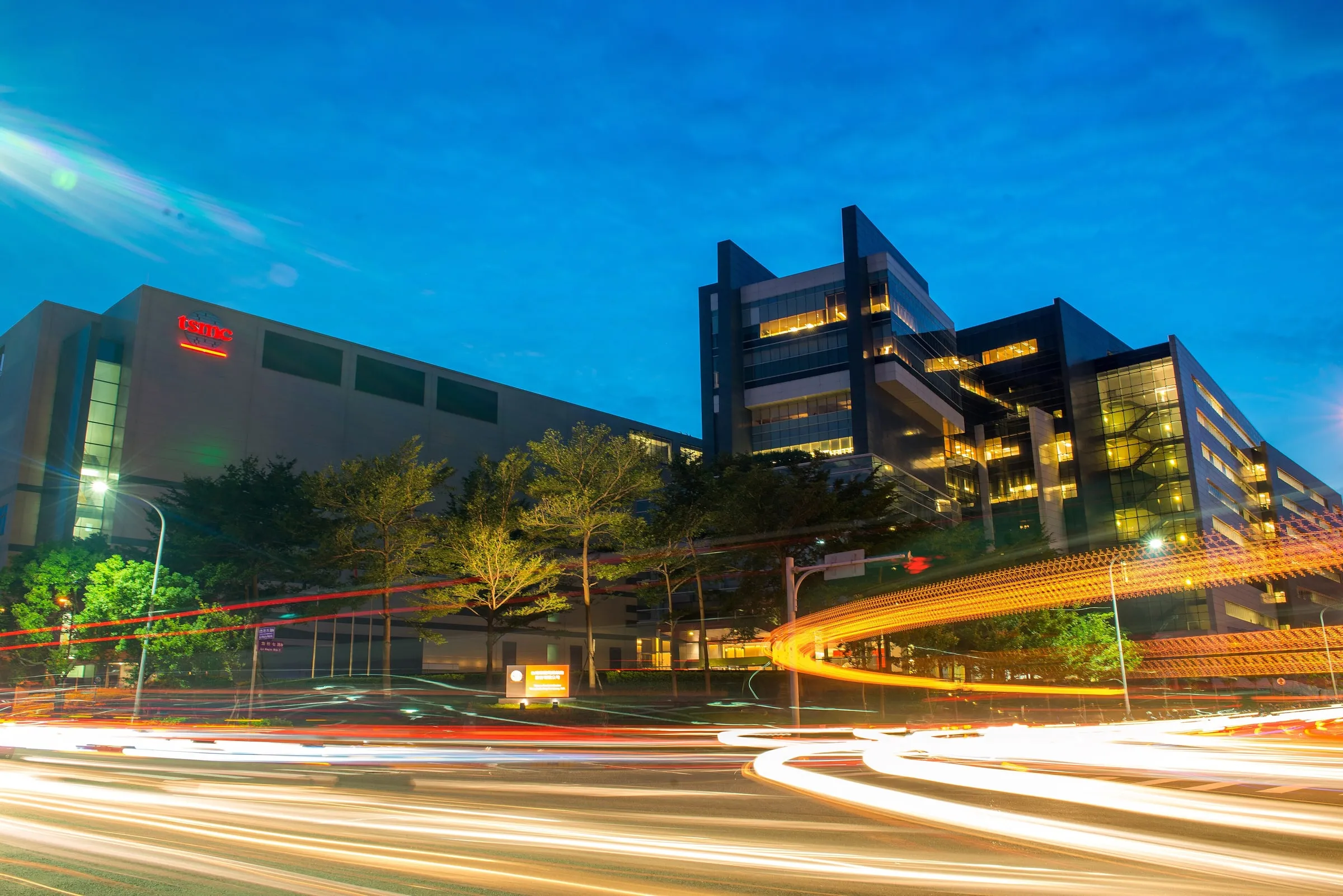
The names on the process nodes did keep falling: 45 nanometres for the A4, 5 for the A14 and M1, 3 for the A17 Pro in 2023, and 2 for the M6 and A20 Pro this year. Treat these as product names rather than measurements. The doubling times above say more about real progress than the labels do.
Fig. 4 · The names
Each foundry process name the first time an Apple chip used it. Names, not measurements: set in type, not drawn to scale.
04 · Crossing over
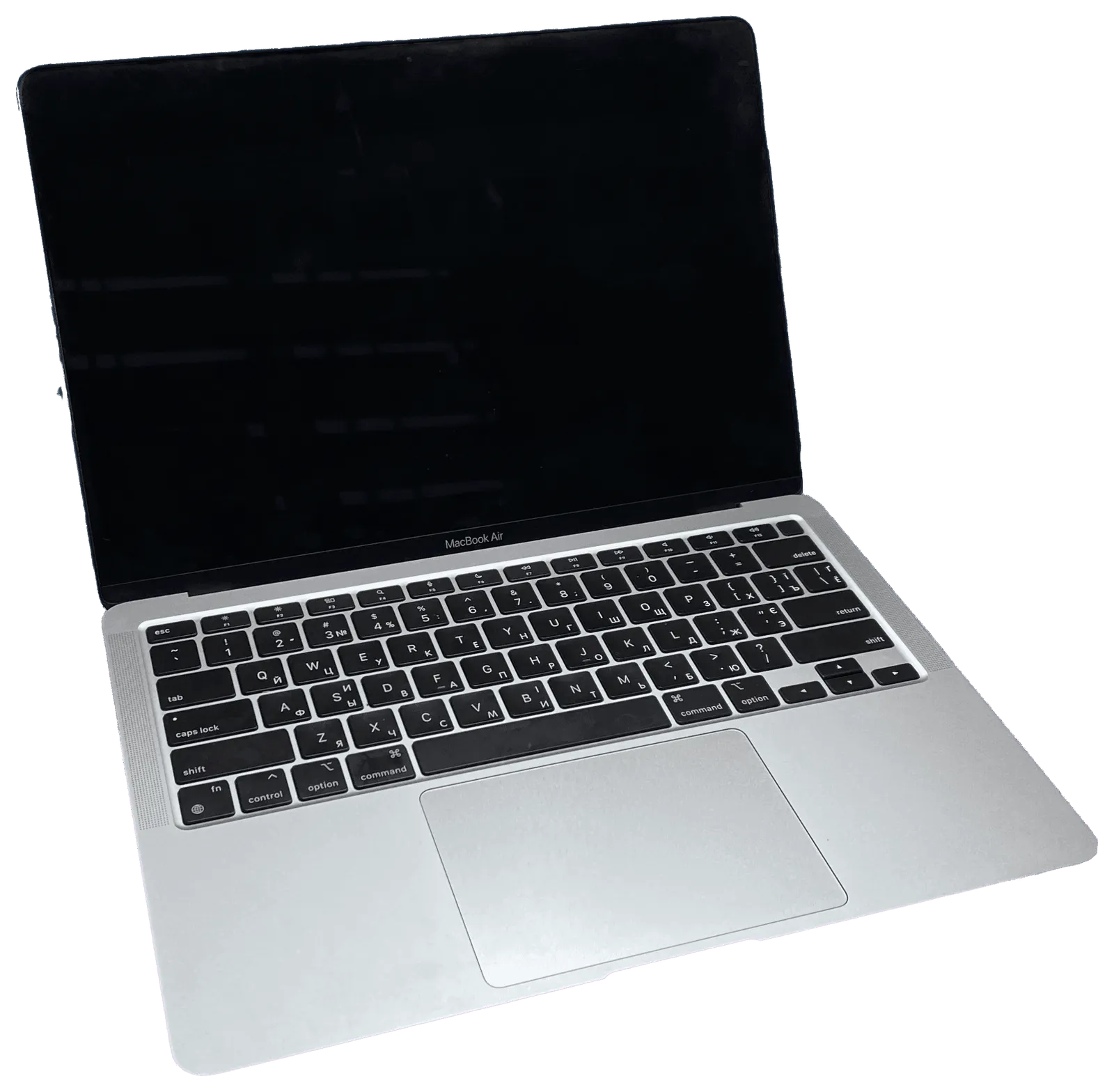
The M1 began as a bigger A14. Both were announced in the autumn of 2020, built on the same 5nm process from the same family of CPU cores. The M1 had two more performance cores, twice the GPU cores and a die about a third larger. Apple had already shipped developers a Mac mini running the A12Z from an iPad Pro, on loan, to prepare for the switch.
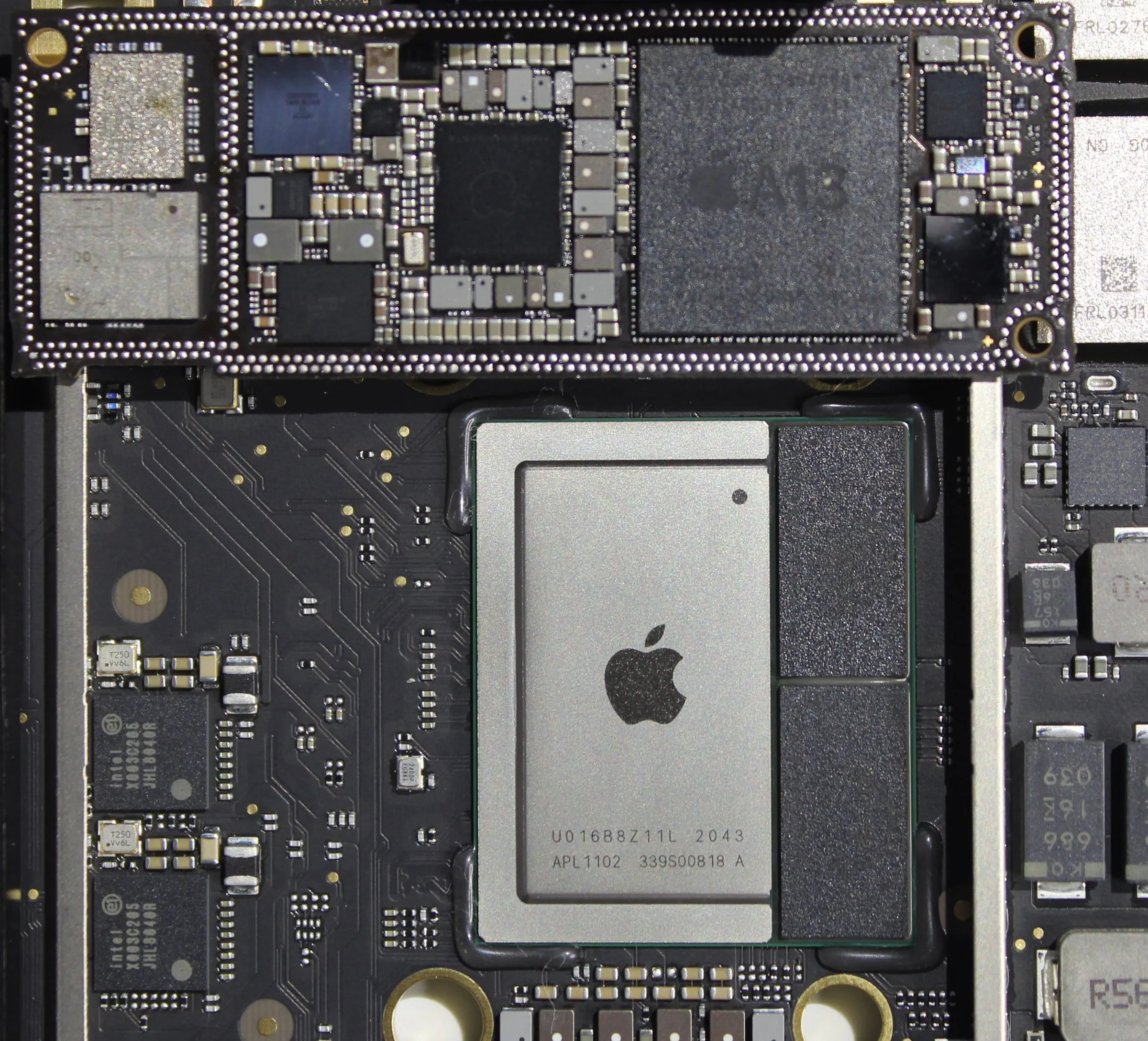
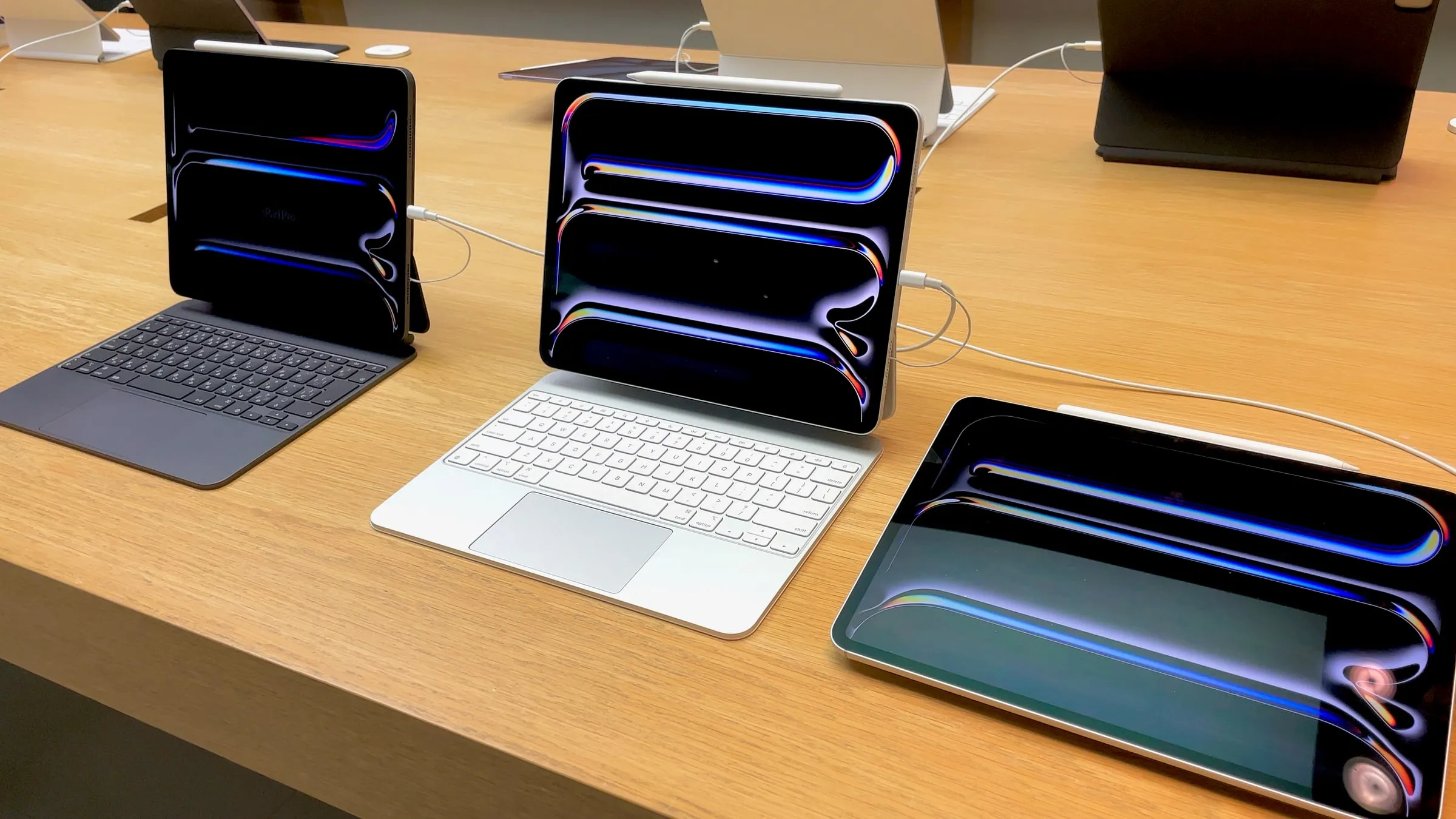
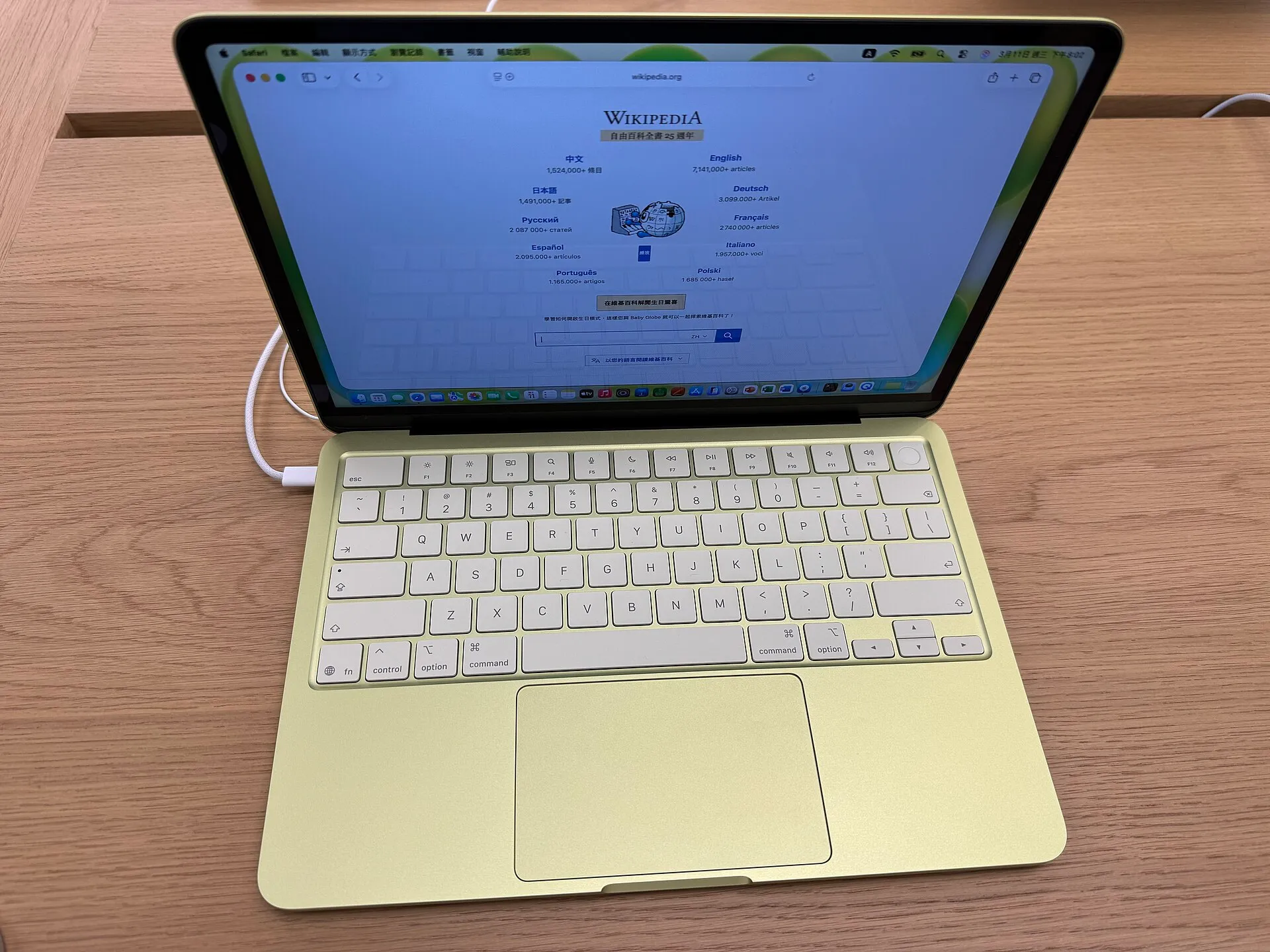
Since then chips have crossed between devices in both directions. The M1 went into the iPad Pro in 2021. The M4 launched in an iPad Pro months before any Mac. And in March 2026 Apple launched the MacBook Neo at US$599. It is the first Mac sold with an iPhone chip, the A18 Pro from the iPhone 16 Pro.
Fig. 5 · Lanes
Where each chip first appeared, and the moves that crossed into or out of the Mac.
The M1 went from the Mac to the iPad Pro. The M4 went the other way. The A18 Pro went from the iPhone to the MacBook Neo.
05 · Glue
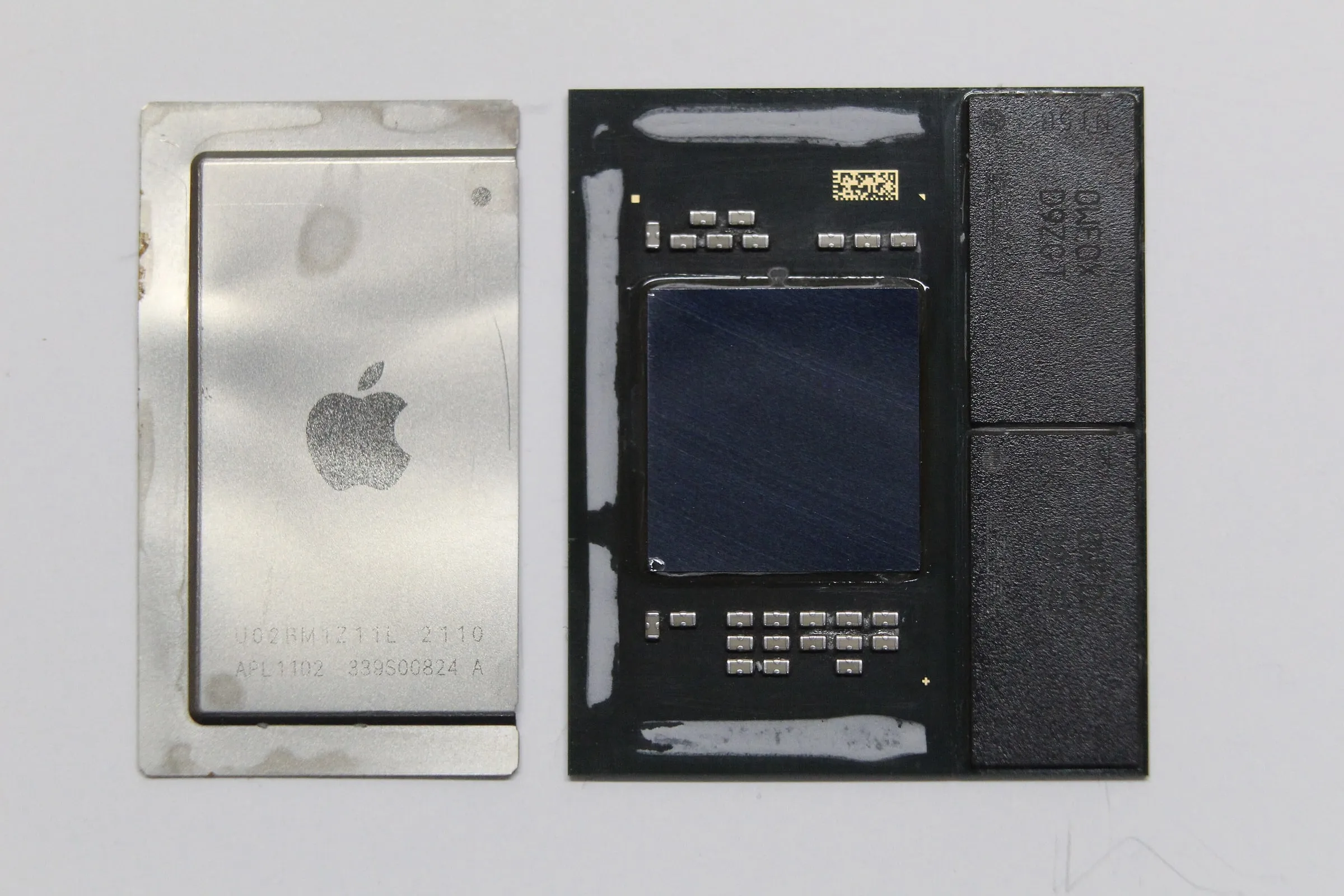
Big dies are expensive. The bigger the rectangle, the fewer fit on a wafer and the more likely each one is to catch a defect. A single die twice the size of the 420 mm² M1 Max would have been costly and hard to make. So for the M1 Ultra in 2022 Apple put two M1 Max dies side by side and wired them together through a silicon bridge carrying more than 10,000 signals at 2.5 terabytes a second. The software sees one chip.
Fig. 6 · Assembly
How Apple’s largest chips are assembled. Schematic, not to scale.
M1 2020
One die. 16 billion transistors.
M1 Ultra 2022
Two M1 Max dies, more than 10,000 signals at 2.5 TB/s. 114 billion transistors.
M5 Max 2026
Two dies inside one chip, which Apple calls Fusion Architecture. Count not published.
M5 Ultra 2026
Two M5 Maxes: four dies, linked at more than 4.4 TB/s. Count not published.
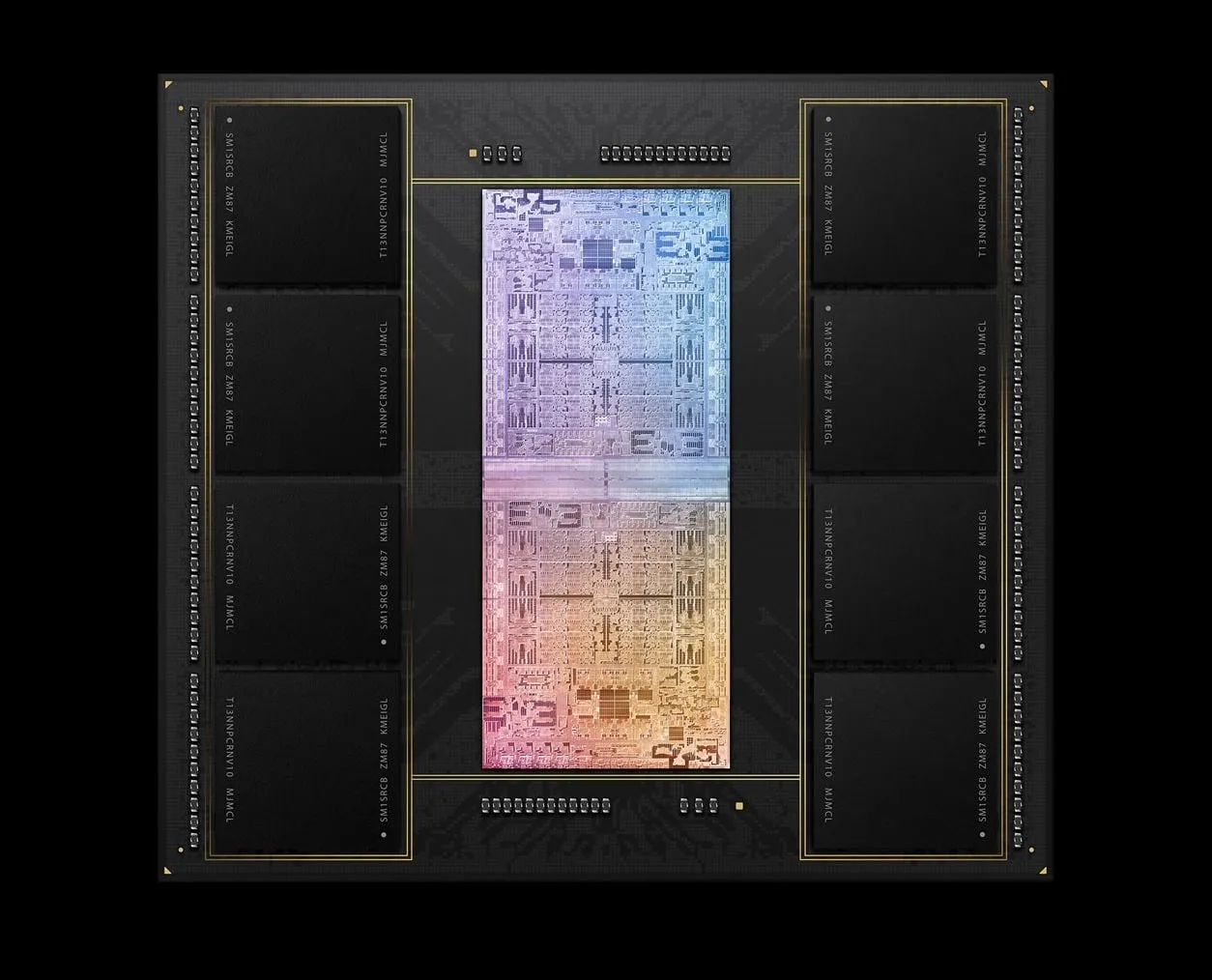
The M2 Ultra (134 billion transistors) and M3 Ultra (184 billion) used the same trick. In 2026 the joins moved down the range. The M5 Pro and M5 Max are each built from two dies, which Apple calls its Fusion Architecture. The M5 Ultra in August joined two M5 Maxes, making Apple’s first four-die chip, linked at more than 4.4 terabytes a second.
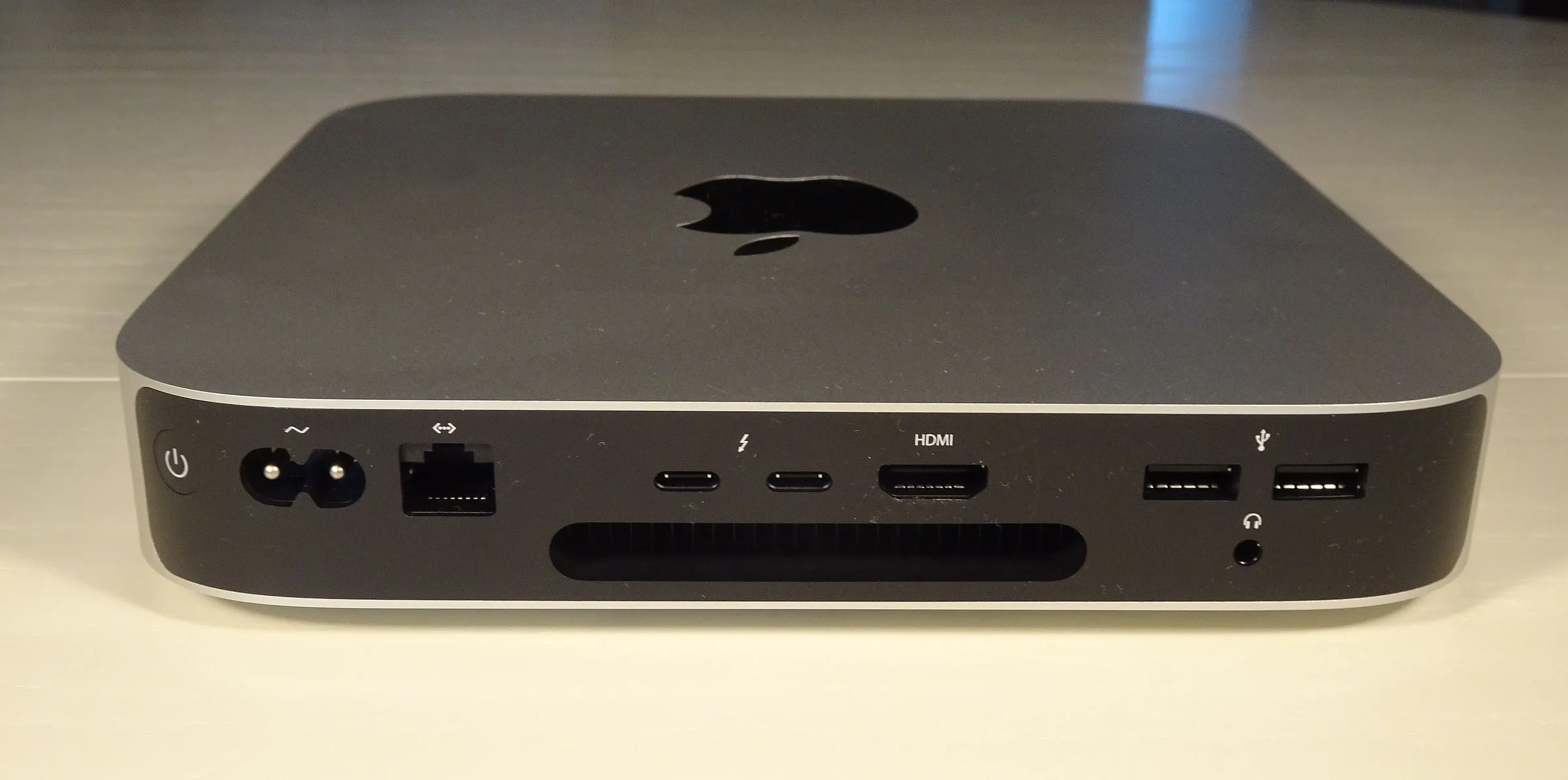
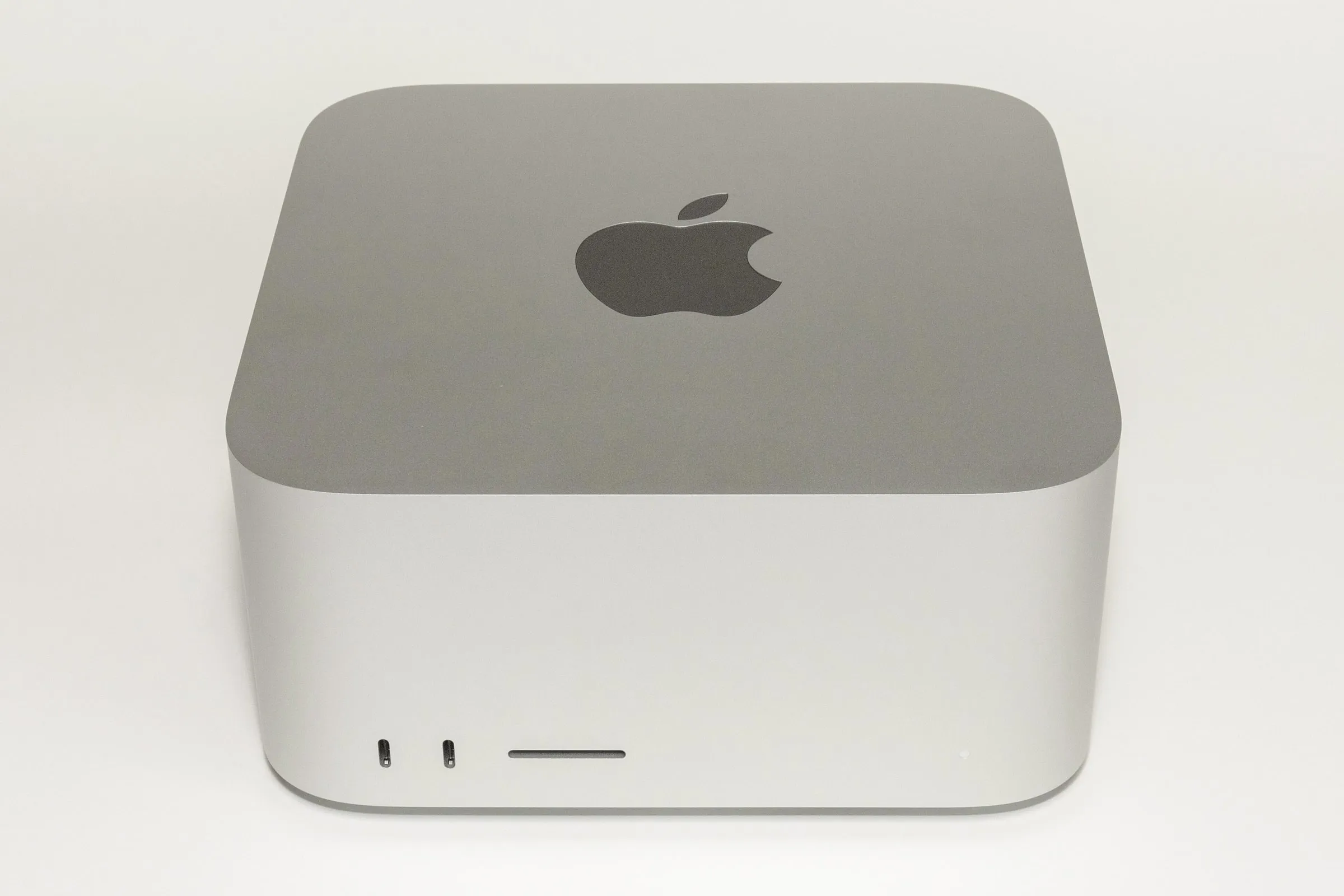
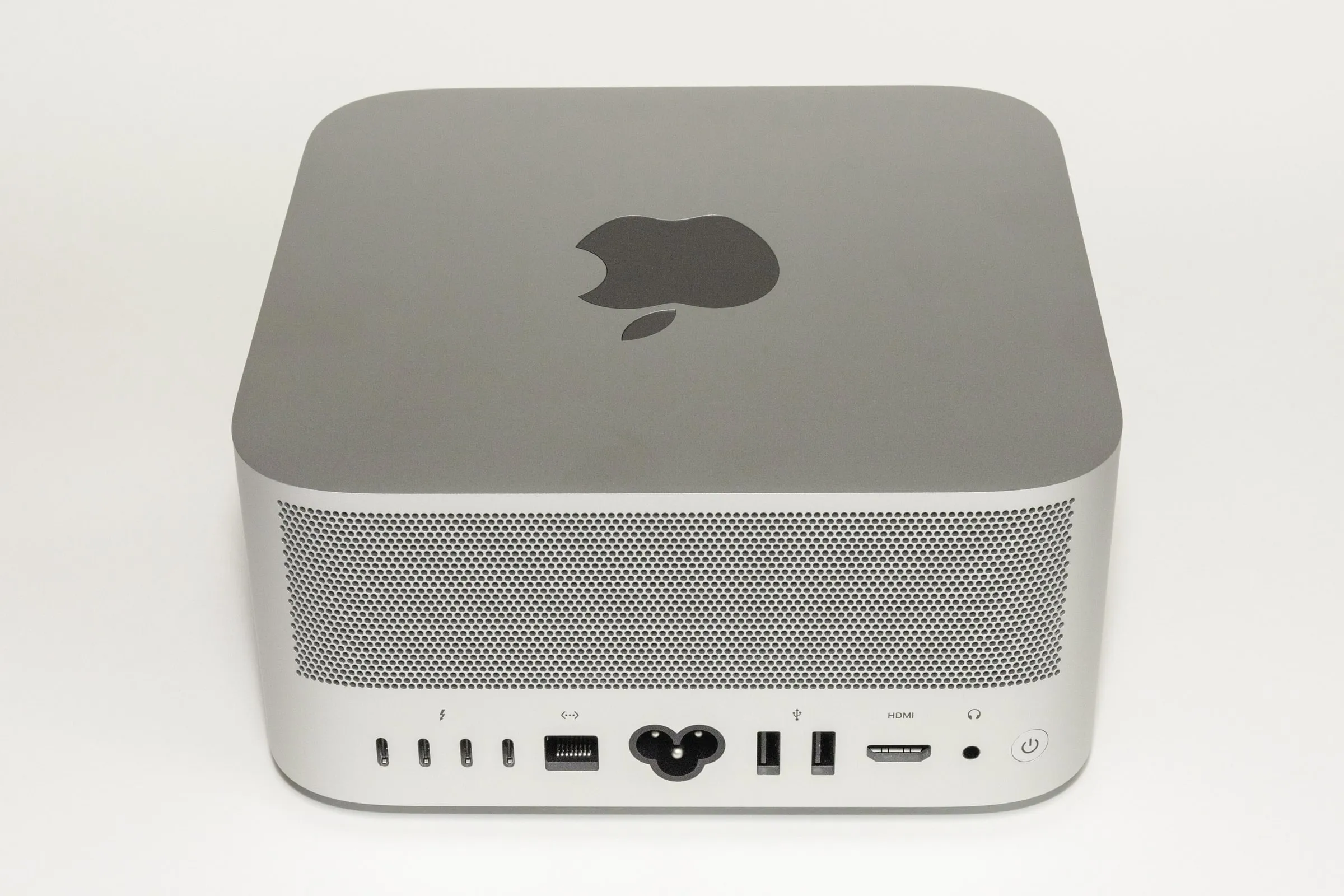
Every Ultra so far has made its debut in the Mac Studio.
06 · The silence
The M4 in May 2024 came with a number: 28 billion. Since then Apple has announced 13 chips, from the A18 in September 2024 to the A20 Pro this September. Only one, the M3 Ultra, came with a transistor count. The October launches added no new chips and no new numbers. The iPad mini got the A20 Pro, and the MacBook Pro and iMac got the M6. Apple has not said why it stopped.
Fig. 7 · The silence
Every A- and M-series chip announced since September 2024, with the transistor count Apple published for it.
One plausible reason is that the numbers stopped impressing. The A15 to A16 step was 15 to “nearly 16” billion. With chips now split across two or four dies, a single figure also says less than it did. The silicon can still be measured. The A20 Pro’s compute die is about 8.0 by 12.3 millimetres, or 98 mm². Counting its switches is another matter.
Where the count stands
| A4 | January 2010 | iPad | 45nm (Samsung) | not published | 1 | 1 | 53.3 | 1 |
|---|---|---|---|---|---|---|---|---|
| A5 | March 2011 | iPad 2 | 45nm (Samsung) | not published | 2 | 2 | 122.2 | 1 |
| A6 | September 2012 | iPhone 5 | 32nm (Samsung) | not published | 2 | 3 | 96.7 | 1 |
| A7 | September 2013 | iPhone 5s | 28nm (Samsung) | over 1 billion | 2 | 4 | 102 | 1 |
| A8 | September 2014 | iPhone 6 | 20nm (TSMC) | 2 billion | 2 | 4 | 89 | 1 |
| A9 | September 2015 | iPhone 6s | 14nm (Samsung) / 16nm (TSMC) | not published | 2 | 6 | 104.5 | 1 |
| A10 Fusion | September 2016 | iPhone 7 | 16nm (TSMC) | 3.3 billion | 4 | 6 | 125 | 1 |
| A11 Bionic | September 2017 | iPhone 8 | 10nm (TSMC) | 4.3 billion | 6 | 3 | 87.7 | 1 |
| A12 Bionic | September 2018 | iPhone XS | 7nm (TSMC) | 6.9 billion | 6 | 4 | 83.3 | 1 |
| A13 Bionic | September 2019 | iPhone 11 | 7nm (TSMC) | 8.5 billion | 6 | 4 | 98.5 | 1 |
| A14 Bionic | September 2020 | iPad Air (4th gen.) | 5nm (TSMC) | 11.8 billion | 6 | 4 | 88 | 1 |
| M1 | November 2020 | MacBook Air | 5nm (TSMC) | 16 billion | 8 | 8 | 118.9 | 1 |
| A15 Bionic | September 2021 | iPhone 13 | 5nm (TSMC) | 15 billion | 6 | 5 | 107.7 | 1 |
| M1 Pro | October 2021 | MacBook Pro | 5nm (TSMC) | 33.7 billion | 10 | 16 | ≈245 | 1 |
| M1 Max | October 2021 | MacBook Pro | 5nm (TSMC) | 57 billion | 10 | 32 | 420.2 | 1 |
| M1 Ultra | March 2022 | Mac Studio | 5nm (TSMC) | 114 billion | 20 | 64 | 840.4 | 2 |
| M2 | June 2022 | MacBook Air | 5nm (TSMC) | 20 billion | 8 | 10 | ≈155.3 | 1 |
| A16 Bionic | September 2022 | iPhone 14 Pro | 4nm (TSMC) | nearly 16 billion | 6 | 5 | – | 1 |
| M2 Pro | January 2023 | MacBook Pro | 5nm (TSMC) | 40 billion | 12 | 19 | – | 1 |
| M2 Max | January 2023 | MacBook Pro | 5nm (TSMC) | 67 billion | 12 | 38 | – | 1 |
| M2 Ultra | June 2023 | Mac Studio | 5nm (TSMC) | 134 billion | 24 | 76 | – | 2 |
| A17 Pro | September 2023 | iPhone 15 Pro | 3nm (TSMC) | 19 billion | 6 | 6 | – | 1 |
| M3 | October 2023 | MacBook Pro, iMac | 3nm (TSMC) | 25 billion | 8 | 10 | – | 1 |
| M3 Pro | October 2023 | MacBook Pro | 3nm (TSMC) | 37 billion | 12 | 18 | – | 1 |
| M3 Max | October 2023 | MacBook Pro | 3nm (TSMC) | 92 billion | 16 | 40 | – | 1 |
| M4 | May 2024 | iPad Pro | 3nm (TSMC) | 28 billion | 10 | 10 | – | 1 |
| A18 | September 2024 | iPhone 16 | 3nm (TSMC) | not published | 6 | 5 | – | 1 |
| A18 Pro | September 2024 | iPhone 16 Pro | 3nm (TSMC) | not published | 6 | 6 | – | 1 |
| M4 Pro | October 2024 | Mac mini, MacBook Pro | 3nm (TSMC) | not published | 14 | 20 | – | 1 |
| M4 Max | October 2024 | MacBook Pro | 3nm (TSMC) | not published | 16 | 40 | – | 1 |
| M3 Ultra | March 2025 | Mac Studio | 3nm (TSMC) | 184 billion | 32 | 80 | – | 2 |
| A19 | September 2025 | iPhone 17 | 3nm (TSMC N3P) | not published | 6 | 5 | – | 1 |
| A19 Pro | September 2025 | iPhone 17 Pro, iPhone Air | 3nm (TSMC N3P) | not published | 6 | 6 | ≈98.6 | 1 |
| M5 | October 2025 | iPad Pro, MacBook Pro, Vision Pro | 3nm (TSMC) | not published | 10 | 10 | – | 1 |
| M5 Pro | March 2026 | MacBook Pro | 3nm (TSMC) | not published | 18 | 20 | – | 2 |
| M5 Max | March 2026 | MacBook Pro | 3nm (TSMC) | not published | 18 | 40 | – | 2 |
| M5 Ultra | August 2026 | Mac Studio | 3nm (TSMC) | not published | 36 | 80 | – | 4 |
| M6 | August 2026 | Mac mini | 2nm (TSMC) | not published | 12 | 12 | – | 1 |
| A20 Pro | September 2026 | iPhone 18 Pro | 2nm (TSMC N2) | not published | 6 | 7 | ≈98.2 | 1 |
Sixteen years after the A4, Apple’s phone chips are still about the size of a fingernail. Its biggest chip is four dies joined into one, and its transistor count is no longer published.
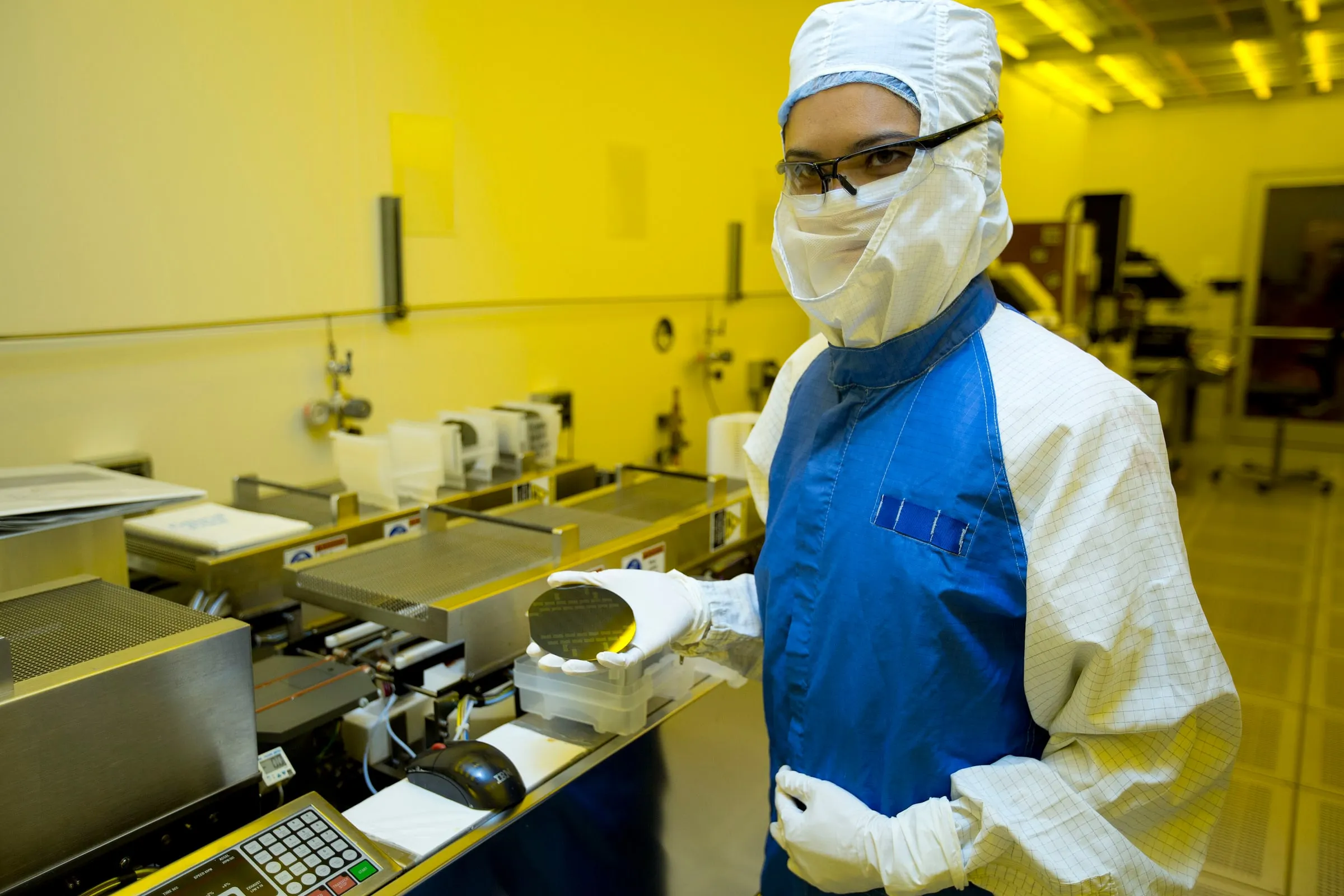
A photolithography cleanroom, lit yellow. Uploaded by Duk 08:45, 16 Feb 2005 / Public domain
Cite this
The Studio (2026). “Billions of Switches.” No. 011, published 2 November 2026. thestudio.nz/drops/apple-silicon
Older
004PlayLEGO
On 1 November 2026, a model of Gaudí’s basilica became the largest LEGO set ever sold. We stacked every set over 5,000 pieces to see how the giants grew, what a piece costs, and how much shelf they need.
Newer
 014
TechApple
Forty-nine things Apple made and then let go, from the Apple I to this year’s Mac Pro. The median one lasted seven years. Six came back.
The list
New stories land on Mondays. No noise in between, and you can leave whenever you like.
The list opens soon.
Until then, follow along with the RSS feed, or write to hello@thestudio.nz and we will add you on day one.